For many builders, the biggest hurdle in a land deal isn’t the land itself — it’s proving the corridor is truly active.
Especially on larger, multi-phase communities, land banks and capital partners want evidence that other builders are already positioning in the same growth area. Not because they need “financing confidence” in the traditional sense, but because they need to model absorption, validate demand, and understand whether the corridor has enough depth to warrant deploying capital.
In theory, that should be simple: more builders = stronger validation. But in practice? It rarely is.
Today, most large acquisitions move through LLCs, structured entities, and opaque ownership trails, making it nearly impossible to verify who’s actually assembling land. Without that visibility, even strong deals can stall — or fall apart entirely. And that’s exactly what happened in the case below.
Case Study: When a Missing Builder Map Killed a Deal
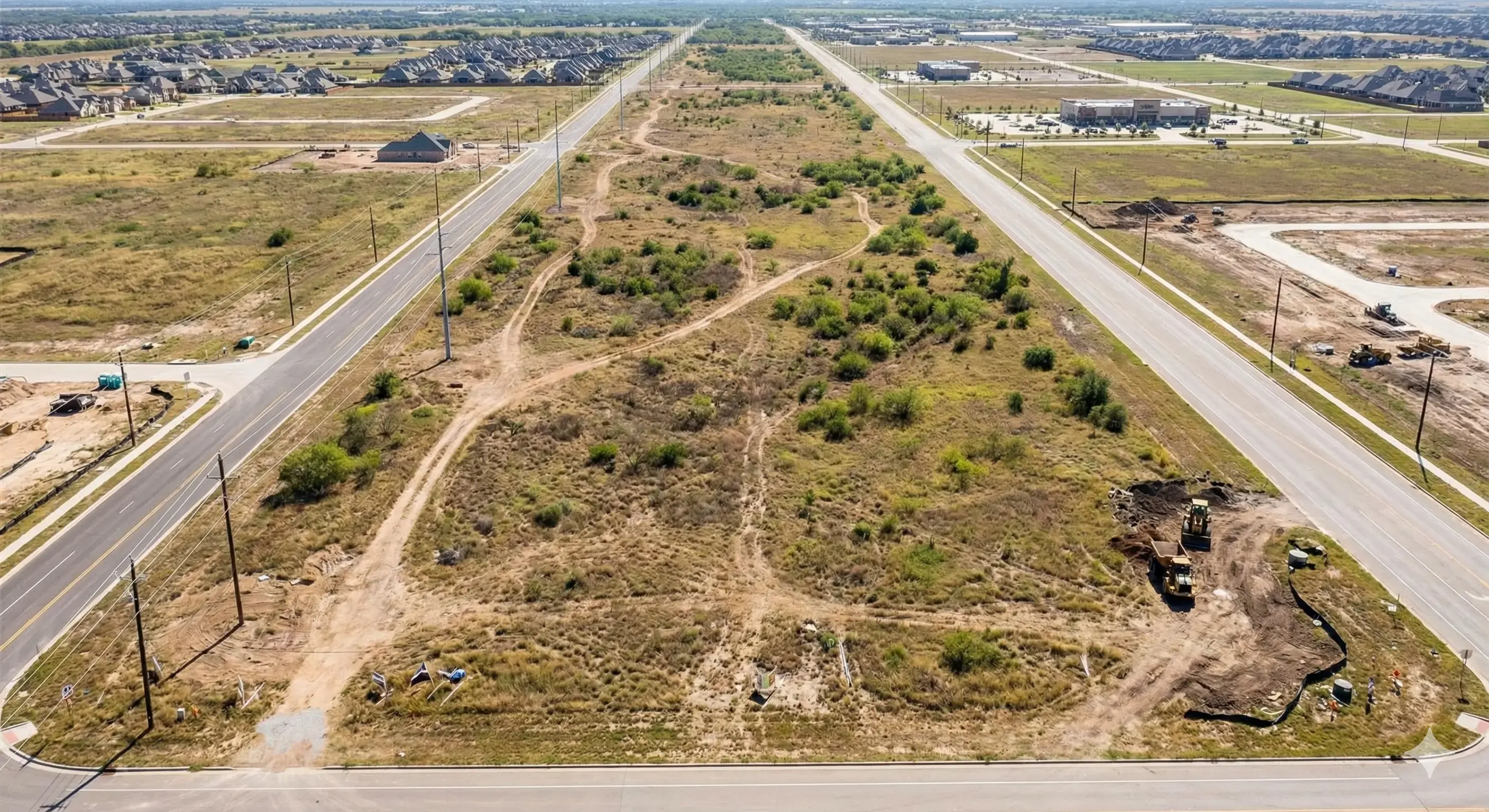
A builder identified a high-potential site: roughly 200 acres with room for several hundred homes in an emerging growth corridor. Early underwriting pointed to strong demand, competitive pricing, and healthy margins.
Their land banker agreed, with one condition.
To move forward, the lender required confirmation that at least a few other builders had active or pending acquisitions within roughly a 3–5 mile radius. In other words, they needed proof the builder wouldn’t be pioneering the corridor alone.
The challenge? Surface-level public records suggested minimal builder presence. But whispers in the market said otherwise — that large nationals had quietly assembled positions through newly formed LLCs.
For months, the acquisitions team tried to untangle the ownership trail using:
- County recorder sites
- Inconsistent parcel histories
- Name variations across LLC filings
- Word-of-mouth intel from brokers
- Scattered GIS layers
None of it offered certainty.
After half a year of delays and roughly six figures in diligence spend, the financing window closed. Without the ability to verify competitive activity, the land banker walked. The builder lost the deal, and the capital they’d already invested.
The problem wasn’t the market. It was the lack of clear visibility.
The Bigger Issue: Opaque Ownership and the Risk It Creates
Builder-led acquisitions almost never appear under the builder’s name. They’re buried in generic LLCs with no clear connection back to the operating brand.
That ambiguity makes it incredibly difficult to understand:
- Which builders are assembling nearby
- Whether the corridor is gaining momentum
- How many entrants are active enough to support absorption assumptions
- Whether “pioneer risk” is real or only appears that way on paper
For land banks and capital partners — who must justify deployment based on corridor maturity — this lack of clarity introduces unacceptable uncertainty.
And uncertainty kills deals.
How Acres Helps Builders Prove Competitive Presence in Minutes
This is where the Acres Home Builder Index changes the equation. Instead of relying on incomplete public data, the Index unmasks LLCs and structured entities to reveal the true builders behind land transactions.
Teams can verify:
- Which builders are active in a 1–10 mile radius
- Where builder demand is increasing
- How mature a corridor really is
- Whether the competitive depth meets land bank expectations
- How quickly new entrants are assembling land
What once took months of manual digging becomes a 10-second visibility check.
This gives acquisition teams:
- Confidence in underwriting
- Verified proof of corridor maturity for land banks
- Faster, cleaner paths to capital deployment
- A competitive edge in fast-moving markets
In today’s environment, where capital partners require clear evidence of builder activity before deploying millions into long-term land positions, visibility isn’t optional — it’s essential.