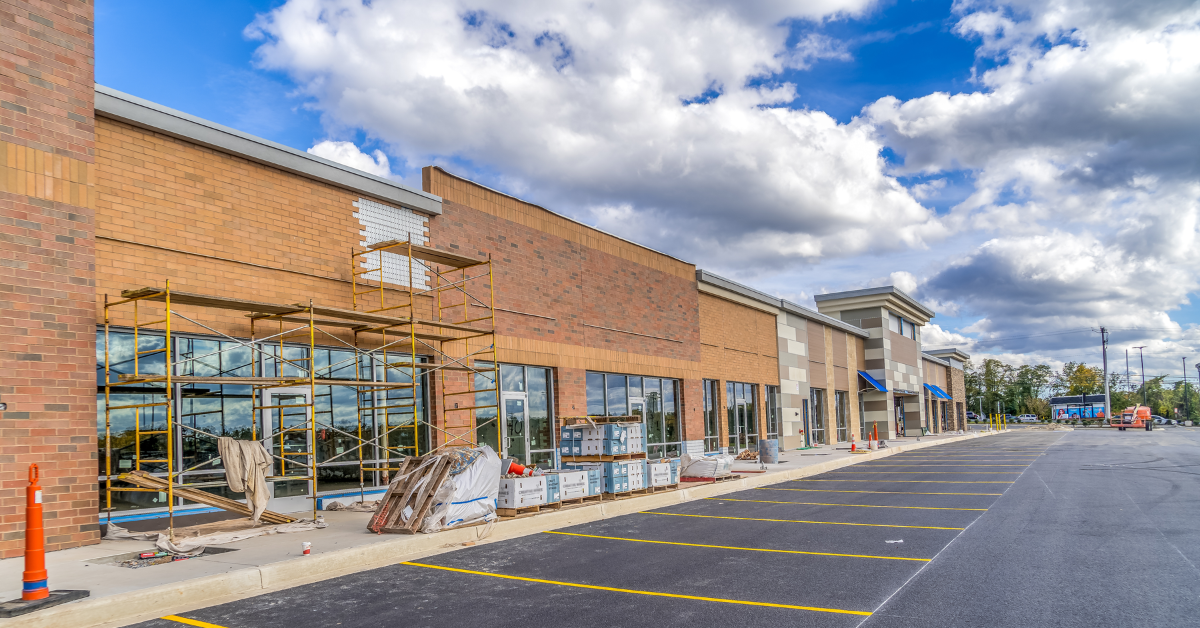
In 2026, leading retail developers aren’t necessarily the ones finding the most sites, but the ones eliminating the wrong sites first.
Many projects don’t fail because teams missed great sites. They fail because they spent too long evaluating sites that were never viable to begin with. Instead of trying to evaluate everything, leading developers focus on eliminating non-viable sites as early as possible.
The Problem: Fragmented Workflows Slow Down Every Decision
Most site selection workflows are still built on fragmented systems.
Teams jump between GIS tools, zoning maps, traffic data, demographic reports, and local policy sources, stitching together a complete picture one layer at a time.
Each step adds time.
Each dataset introduces friction.
And every additional layer increases the cost of making the wrong call.
By the time a site is fully evaluated, time and capital have already been invested.
The result is a pipeline filled with sites that should have been eliminated much earlier.
Eliminate First, Validate Second
Instead of deeply analyzing every site, leading teams start by quickly eliminating the ones that don’t meet core criteria.
This approach depends on having immediate access to a complete, connected view of land data—not fragmented layers spread across tools.
That’s where Acres Intelligence comes in.
Using Acres Intelligence to Validate Opportunities And Disqualify Non-Viable Sites in Minutes
Acres Intelligence is a system that allows land teams to prospect, evaluate, and disqualify sites all in one platform. Instead of manually assembling data, teams can describe exactly what they’re looking for and immediately surface sites that match.
With Acres Intelligence, teams can:
- Quickly disqualify parcels by applying core criteria for land searches upfront, eliminating non-viable sites in seconds.
- Instantly validate zoning feasibility, restrictions, timelines, and potential risks.
- Disqualify low-visibility locations by analyzing traffic volume without leaving the platform.
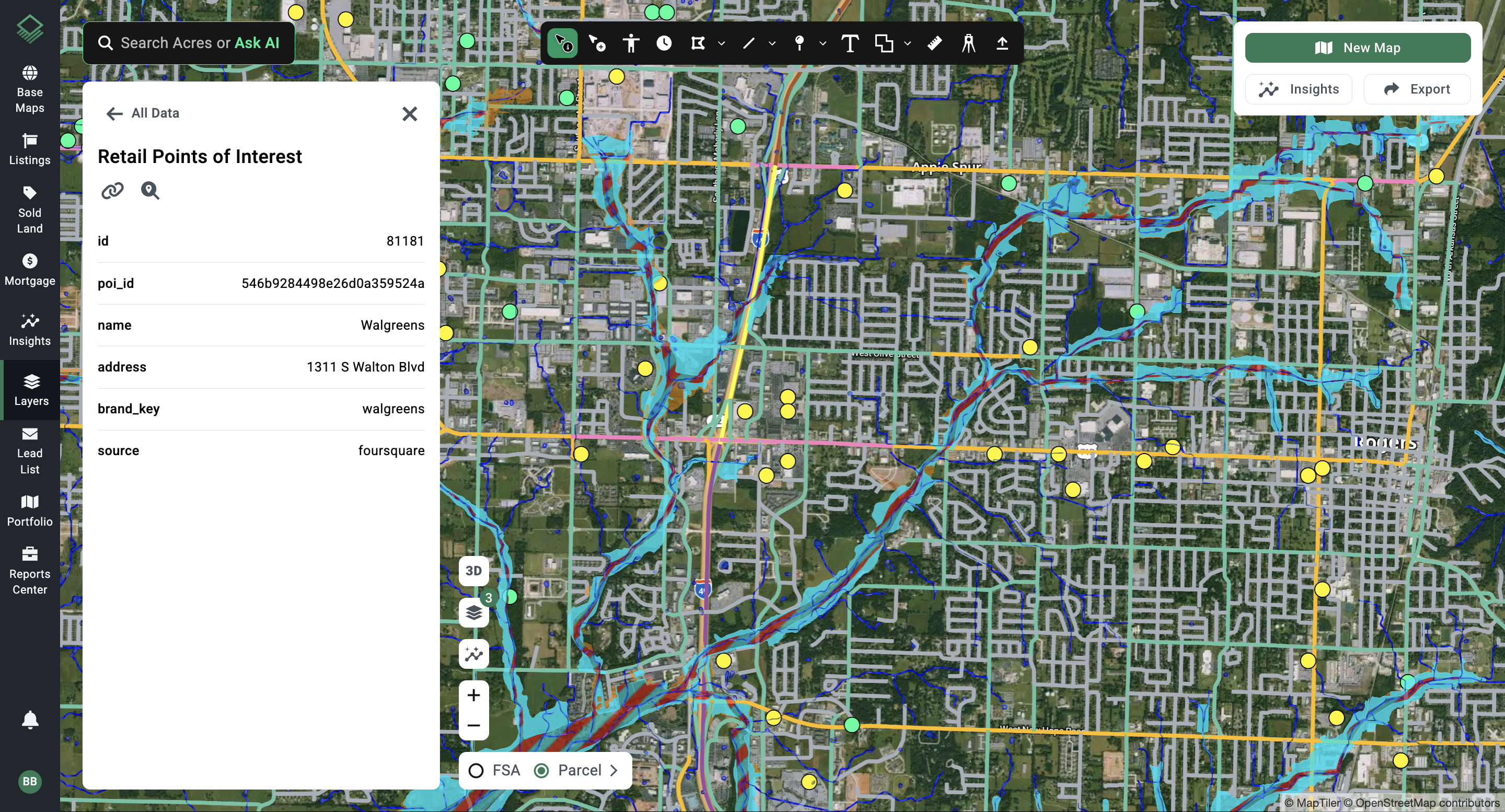
- Identify oversaturated areas by understanding nearby retail points of interest and competitive density.
- Evaluate market viability using census data and planned expansion signals, ensuring alignment with target customers.
- Understand environmental risks early, including flood zones, elevation, and other critical constraints.
- Assess site readiness and long-term viability by analyzing infrastructure context, including road access, nearby development, and critical connectivity factors.
- Manage every potential deal and eliminate parcels in collaborative portfolios, keeping your entire team aligned on what is worth pursuing and what is not.
Because everything is connected, the process does not restart at each step. The same intelligence used to screen a site is also used to validate it, share it, and act on it.
The Best Deals Don’t Come From Moving Faster, But Saying “No” Sooner.
The outcome is not just faster research. It is a fully connected workflow that enables faster, more confident decision-making at scale. With Acres, teams spend less time stitching together information and more time acting on it.
The developers who win in 2026 are eliminating the wrong sites earlier, protecting their time and capital, and focusing only on high-quality opportunities.
In today’s market, scale does not always come from evaluating more sites, but from eliminating the wrong ones faster than everyone else.
See how Acres Intelligence helps your team eliminate non-viable sites in seconds and focus only on the opportunities that matter. Book a demo today.