Development
Rising Land Risk: 5 Key Takeaways from The Builder’s Daily Feature
Learn what The Builder’s Daily reveals about builders’ blind spots, and how Acres helps turn risk into strategy.
Identify retail growth corridors before the competition with Acres’ demographic data, predictive land intelligence, and residential development signals.
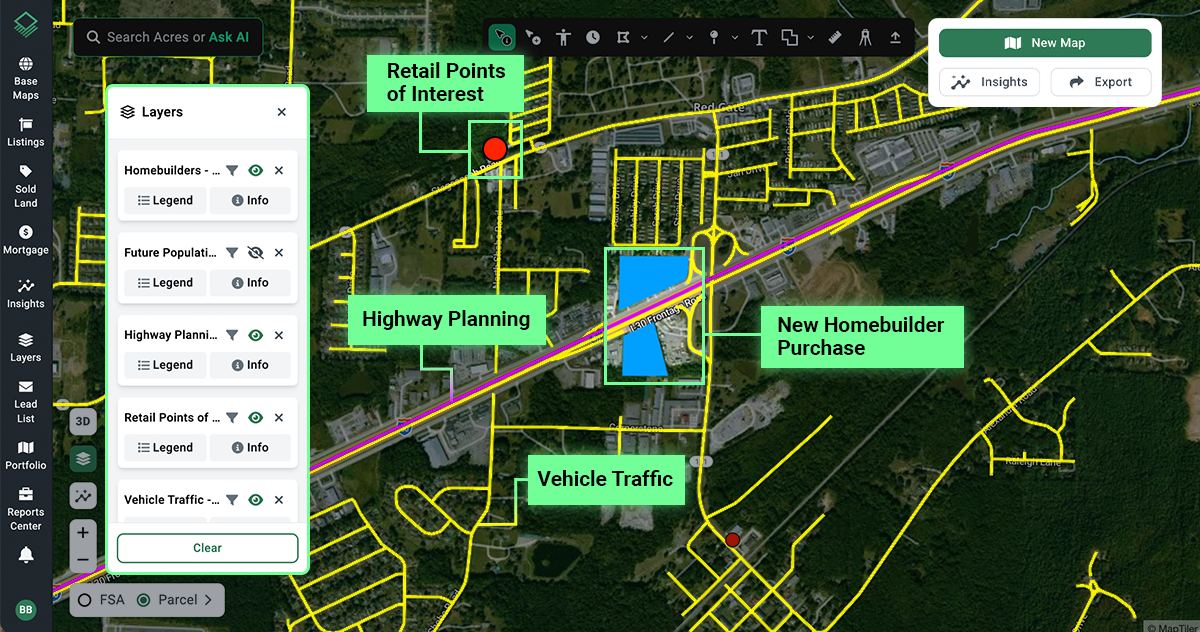
Many retail developers are still building based on where demand exists today. They look for proof that a location already works. The problem is that by the time a site looks obvious, it's likely obvious to your competitors too.
In 2026, the advantage does not go to the teams that identify strong existing locations. It goes to the teams that identify future demand before it becomes visible to everyone else.
For decades, site selection has been driven by what's visible today. Developers evaluate existing traffic volume and established retail clusters—signals that confirm a market is already working.
When teams rely on the same market signals, they end up chasing the same sites, driving up acquisition costs and crowding the trade areas they're trying to own. Your team deserves an edge, not a footrace.
Meanwhile, drivers of retail demand like new residential development, infrastructure expansion, and shifting commuter patterns rarely show up in these signals until it's too late. The most valuable insight is no longer where demand exists, but where demand is forming. This is the shift from backward-looking analysis to forward-looking land intelligence.
Instead of asking: Where does demand exist today?
Leading teams are asking:
Some of the most lucrative retail opportunities sit on the path of growth—the locations positioned along emerging corridors where people move as new infrastructure and development reshape the area.
That means spotting planned highway expansion, emerging routes, early-stage residential clusters, and new infrastructure development early, then securing positions along those paths before demand fully materializes.
This is where the Acres Home Builder Index becomes critical. By identifying incoming residential development, teams can anticipate where future demand will originate.
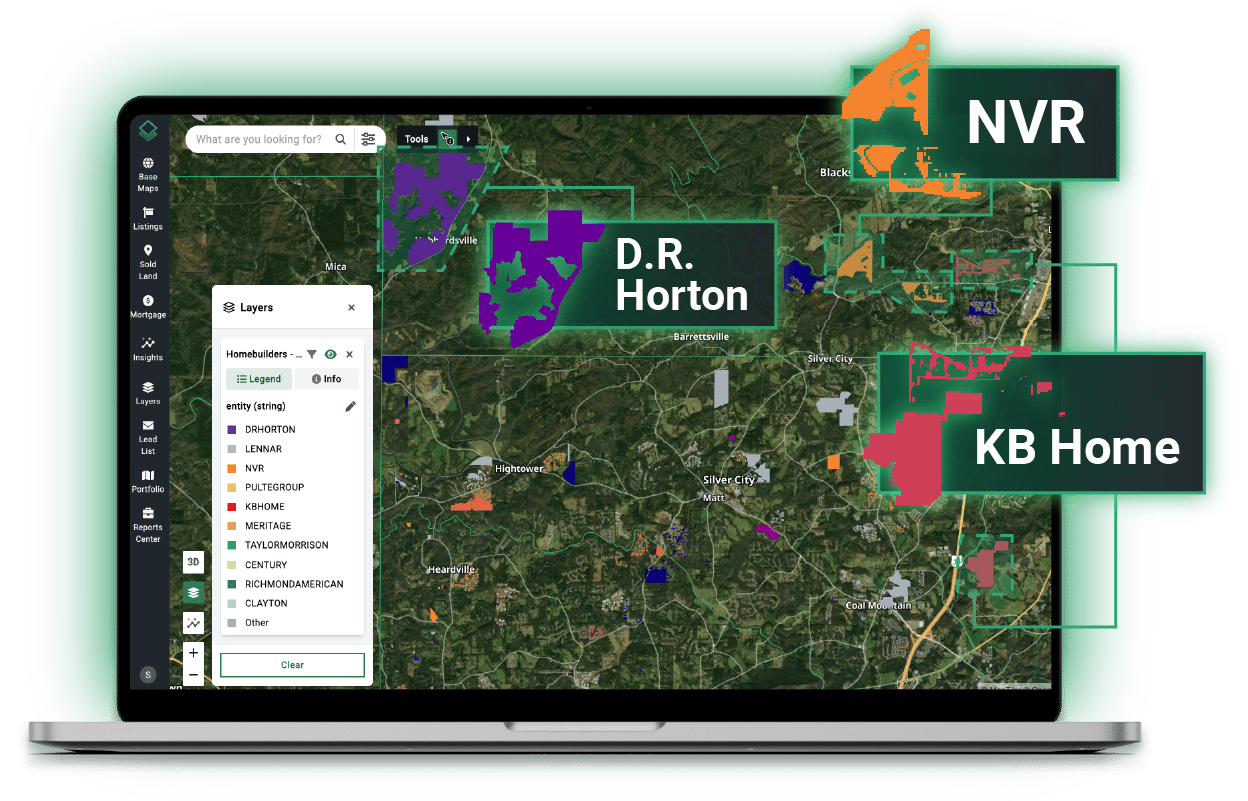
Those who wait for confirmation risk paying more, entering saturated markets, or playing catch-up instead of getting there first.
Developers who identify growth corridors early can:
Acres Intelligence gives developers the ability to see what others cannot yet see.
By bringing together infrastructure data, residential growth signals, traffic patterns, and parcel details, teams can identify where demand is forming before it becomes visible in traditional metrics.
With Acres Intelligence, developers can:
Instead of seeing a vacant parcel, teams can see a future high-traffic corner. Instead of reacting to demand, they position themselves ahead of it.
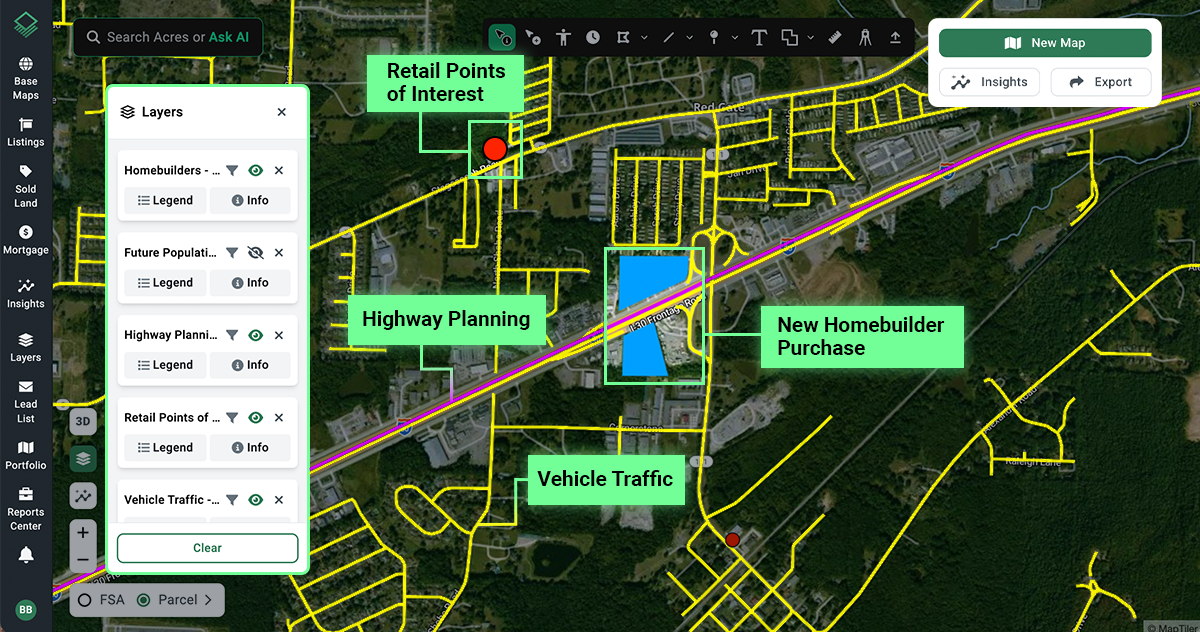
The best retail sites aren’t always the ones everyone is bidding on, but the ones that have not been recognized yet. The developers who win in 2026 are not chasing demand. They are positioning ahead of it.
They are building along the path of growth, anticipating movement before it becomes obvious, and acting before the market catches up.
Book a demo to see how Acres Intelligence and the Home Builder Index can help your team identify emerging corridors early—and move ahead of the competition.
Learn what The Builder’s Daily reveals about builders’ blind spots, and how Acres helps turn risk into strategy.
Toll Brothers turned a retired golf course into a luxury infill development. Here’s how early land acquisition signals revealed the move ahead of...
See how the Acres Home Builder Index gives suppliers a competitive edge with real-time builder data, market signals, and strategic insights you can...