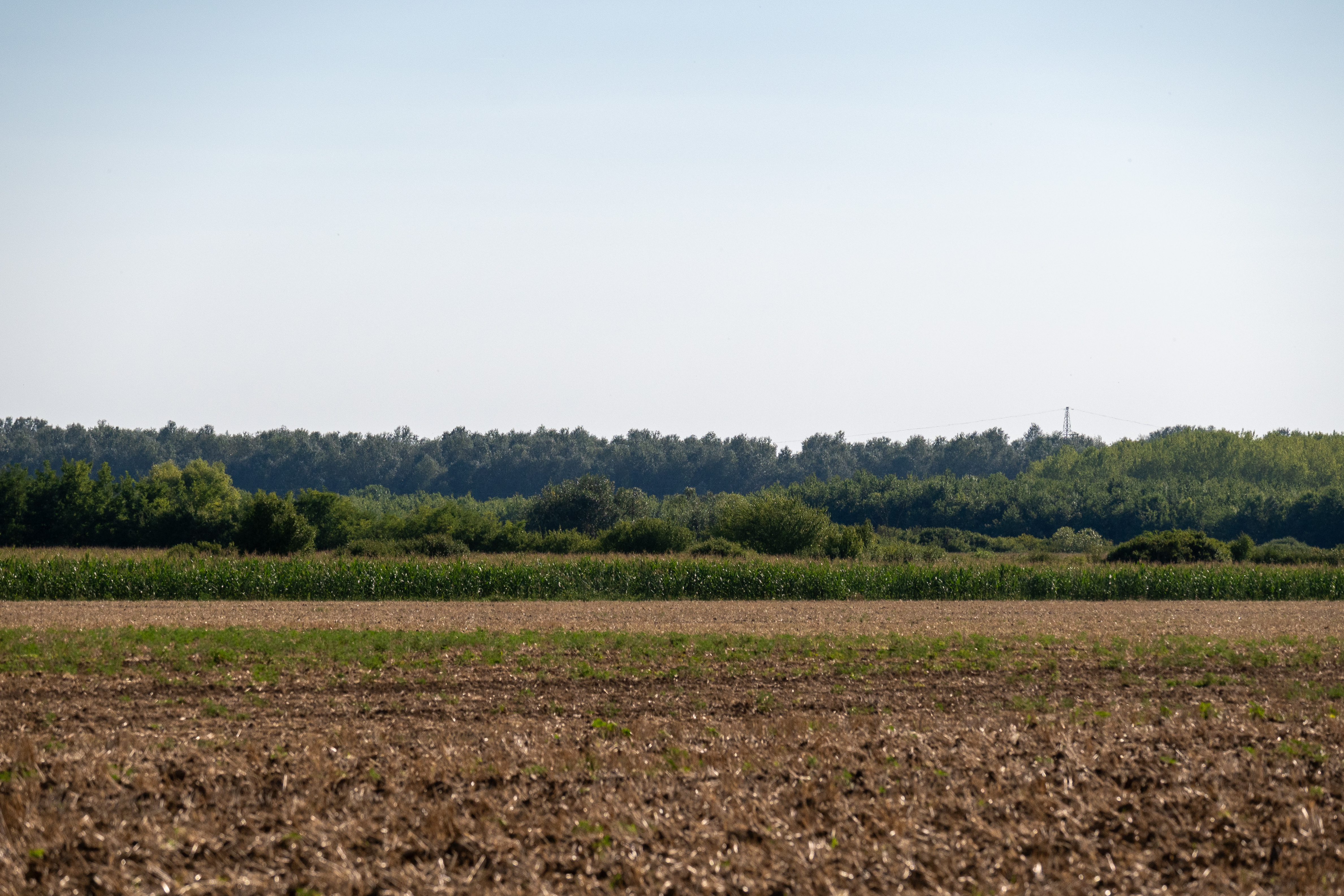
Land investing is the purchase of raw or undeveloped parcels with the intent to hold for appreciation, lease for income, or sell to a developer who sees what the market has not yet priced in. It is one of the most under-allocated asset classes in America, where a persistent lack of centralized data often creates wider gaps between a parcel's intrinsic potential and its market price than what you see in more traditional real estate categories.
Although stocks, bonds, and residential real estate capture the majority of investor attention, land remains largely overlooked, even though it is the foundation every other asset class is built on. Acres.com tracks over 150 million parcels of U.S. land, giving buyers and investors complete, current parcel intelligence to uncover prime market opportunities.
Contents
Why Land Gets Left Out of Most Investment Conversations
What Makes Land Different From Every Other Asset Class
How Land Investing Compares to Stocks and Residential Real Estate
The Three Core Land Investing Strategies
What Land Investing Is Not
How Acres.com Supports Land Investing Research
The Takeaway on Land Investing
Why Land Gets Left Out of Most Investment Conversations
Land is America's largest tangible asset. U.S. farm real estate alone was valued at a forecasted $3.67 trillion in 2025, representing 83.6% of total U.S. farm assets. Yet many financial planning conversations skip it entirely.
Because raw land does not pay dividends, lack earnings per share, or fit into standard brokerage accounts and robo-advisor algorithms, this enormous asset class remains underrepresented in diversified portfolios despite a long-term appreciation track record that rivals traditional stocks and bonds.
The misconception is that land investing is complicated. The reality is that it requires different research skills than stock-picking, but the underlying logic—buy a finite, scarce resource at below-market value before demand catches up—is straightforward.
The barrier is often information, not capital.
What Makes Land Different From Every Other Asset Class
Land does not depreciate. A residential building loses value over time through wear, code changes, and obsolescence, but the land underneath it does not. When a structure is demolished, the land remains. When demand for a geography increases, driven by population growth, infrastructure investment, or rezoning, the land captures that value directly.
Land also has no operating costs that erode returns in the way rental properties do. There is no HVAC to replace, no roof to repair, no tenant to manage. Carrying costs are limited to property taxes, which on raw land in rural or transitional markets are often a small fraction of the parcel's market value.

How Land Investing Compares to Stocks and Residential Real Estate
While stocks offer liquidity and accessibility, a company can always issue new shares—whereas the supply of physical land is finite. This scarcity is a core driver of why land in the path of development consistently appreciates faster than the surrounding built environment.
Residential real estate offers income and leverage but comes with execution complexity. Property management, tenant risk, financing constraints, and regulatory overhead all create friction. Land investing strips most of that out. The tradeoff is that raw land does not generate immediate cash flow, which means the investment thesis is almost entirely appreciation-based and requires patience.
The appreciation case is grounded in data. U.S. cropland values increased 2.2% in inflation-adjusted terms between 2024 and 2025, reaching an average of $5,830 per acre, with a compound annualized growth rate of 2.5% over the previous five years.
However, land sitting directly in the path of development often appreciates much faster as it transitions to commercial or residential use.
The Three Core Land Investing Strategies
Land investing is not a monolithic strategy. Three approaches account for the majority of land investment activity:
1. Hold for appreciation
The simplest strategy: buy a parcel in a market with identifiable demand drivers (population in-migration, planned infrastructure, proximity to employment centers), and hold until the market reprices it. No development required.
2. Buy and entitle
A buyer acquires raw land, invests in entitlement (zoning approvals, environmental clearances, utility access), and sells the entitled parcel to a developer at a premium. Because it eliminates years of regulatory risk and permitting delays, fully entitled land can command two to four times the price of equivalent raw land in the same market.
3. Lease for income
Agricultural land, timberland, and recreational parcels can generate lease income while the owner holds for long-term appreciation. Farmland cash rents averaged $161 per acre nationally in 2025. That income does not make land a high-yield asset, but it offsets carrying costs while appreciation plays out.
What Land Investing Is Not
Land investing is not land speculation. The most durable land investment theses are driven by fundamentals like location, zoning trajectory, infrastructure proximity, and demand data, not by hope that “a greater fool” will pay more next month.
It is also not inherently passive once you move beyond simple hold strategies. Entitlement processes require active management. Permitting involves coordination with multiple agencies. Understanding which strategy matches your time and capital available is the first decision, not an afterthought.
The information asymmetry in land investing is real and persistent. Most buyers are working with incomplete data: assessor records that lag the market, ownership information that is hard to verify, and zoning context that requires separate research.
Closing that gap is what separates disciplined land investors from those who overpay for parcels with hidden constraints. Rather than pulling this data from separate county portals and state databases, Acres brings ownership, zoning, parcel context, and transaction history together so buyers can research faster and decide with more confidence.
How Acres.com Supports Land Investing Research
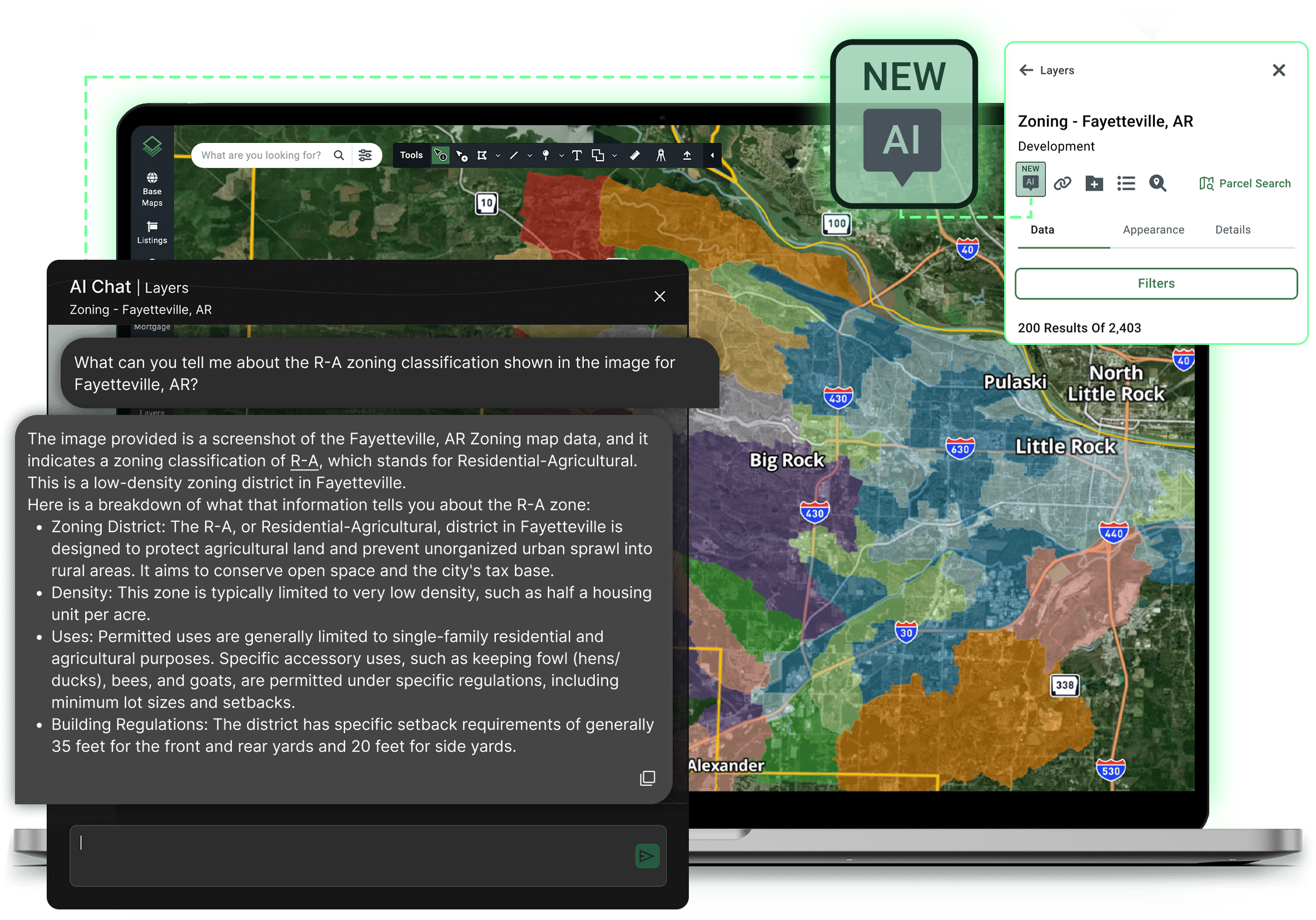
For investors building a land strategy, the research phase is where deals are won or lost. Acres gives buyers access to the most extensive, complete view of land data in a single system, including ownership, parcel details, zoning, environmental signals, and infrastructure context for over 150 million parcels.
Whether you are evaluating comparable sales to price a target parcel or screening geographies for development, land valuation research on Acres starts with the full parcel picture.
Weeks of land research become minutes with complete land data and powerful AI. For investors evaluating development feasibility, Acres surfaces the zoning, infrastructure proximity, flood risk, and ownership context that drives the buy or pass decision. The site analysis tools on Acres are built for exactly this kind of pre-acquisition diligence.
The Takeaway on Land Investing
Land investing is not complicated, but under-explored. The asset class sits at the intersection of scarcity, appreciation, and strategic optionality in a way that stocks, bonds, and even residential real estate rarely match. The barrier to entry is primarily information: understanding what a parcel is worth, what surrounds it, and where demand is heading.
Investors who close that information gap consistently, with reliable data and disciplined research, are the ones who find land as an investment before the market does.
Ready to start researching land investment opportunities? Explore parcel data, ownership records, and market context across 150 million+ U.S. parcels. Start your land research on Acres.