Buying land is one of the most tangible investments a person can make. Unlike stocks or funds, you can walk your property, see its boundaries, and plan exactly what you want to build, grow, or preserve on it. But knowing how to buy land the right way matters. The process moves faster than most buyers expect, and missing a step during due diligence can cost you far more than any purchase price.
Acres.com gives buyers a single place to research parcels, review ownership data, and understand zoning before making any offer — so the process can start with confidence, not guesswork.
Contents
Why the Land Purchase Process Catches Buyers Off Guard
Your Step-by-Step Guide to Buying Land
How Acres.com Supports the Land Purchase Process
Key Takeaways
Why the Land Purchase Process Catches Buyers Off Guard
Land is America's largest asset class, yet the buying process is rarely straightforward. Unlike purchasing a home, there is no standard inspection template, no MLS system that shows every relevant detail, and no single document that confirms whether a parcel can support your intended use. Each county operates under its own zoning codes, each lender underwrites raw land differently, and each seller may hold only partial rights to what they are selling.
The stakes are significant. U.S. farm real estate averaged $4,350 per acre in 2025, up 4.3% from the prior year, and land values have risen for five consecutive years. Missing a zoning restriction, an unpermitted easement, or a title defect can erase gains quickly.
The good news: a clear, step-by-step approach to buying land turns a complicated transaction into a manageable one.
Your Step-by-Step Guide to Buying Land
Step 1: Define Your Goals and Budget
Start by answering two questions: what do you plan to do with the land, and how much can you realistically spend? Your intended use shapes every decision that follows. A parcel for a custom home build needs different zoning than farmland or a hunting retreat.
Budget beyond the purchase price. Survey and soil testing costs run $1,500-$5,000, title insurance on rural properties ranges from $1,000-$3,000, and utility hook-ups can add tens of thousands more. Build those into your ceiling before you start searching.
Step 2: Search for Available Parcels
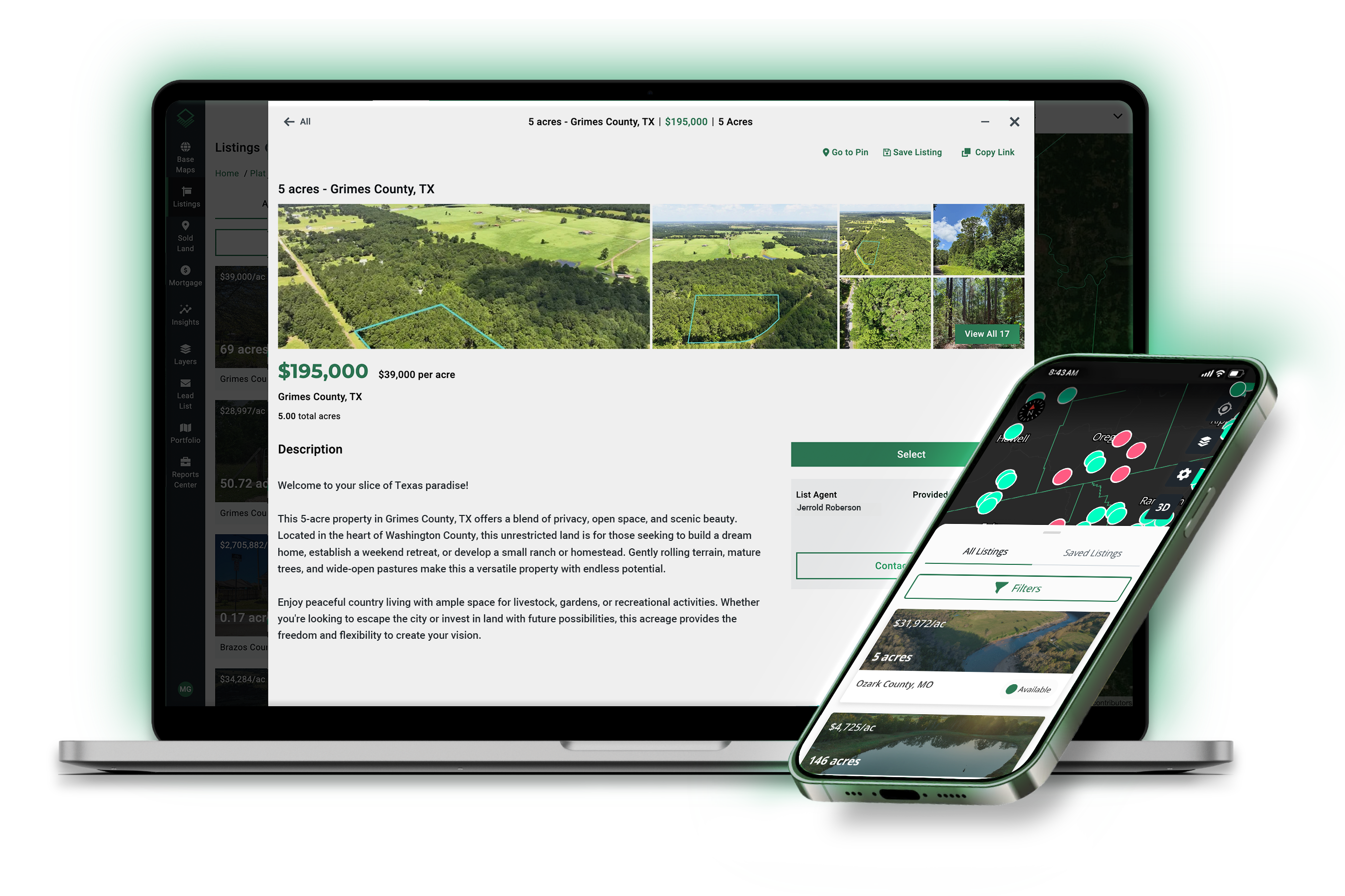
The search stage is where most buyers lose the most time. County GIS portals, public auction sites, land-specific marketplaces, and word-of-mouth referrals can each surface different inventory. Finding land for sale in a target area often means pulling data from several places and reconciling ownership records that may not be updated in real time.
With Acres:
Explore nationwide land listings or search and filter through 150 million parcels to find your perfect match. Filter by acreage, land use, ownership status, and proximity to roads or utilities.
Step 3: Verify Zoning and Permitted Uses
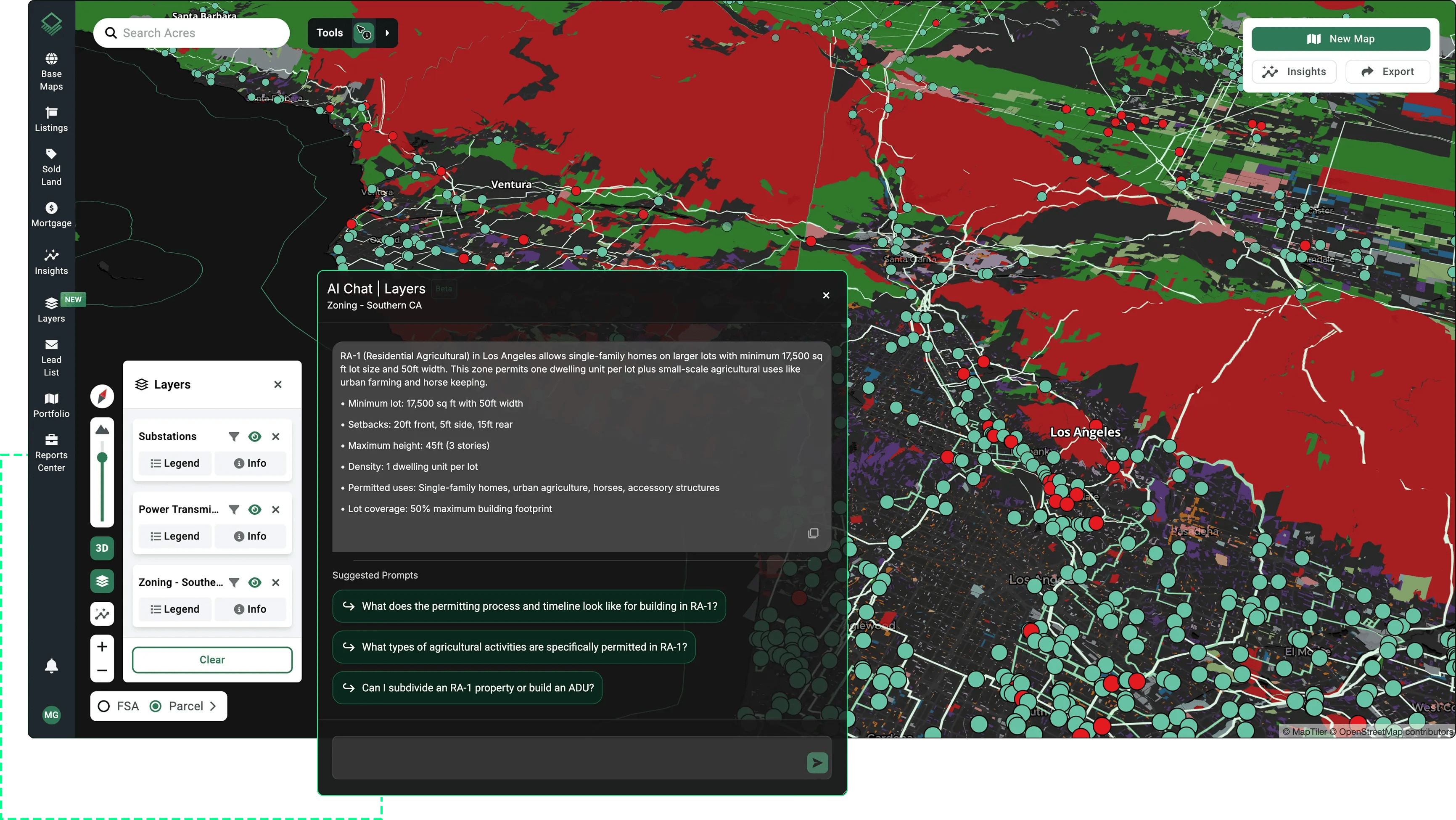
Zoning is the most important check before any land purchase. Even rural parcels that look buildable on a map may be classified for agriculture only, meaning a residential structure requires a rezoning process that can take months and is not guaranteed.
Contact the county planning or zoning department and ask specifically whether the parcel allows your intended use. Review setback requirements, minimum lot sizes, and any overlay districts that could restrict development. Easements and deed restrictions deserve equal attention — they stay with the land regardless of who owns it.
With Acres:
Overlay local zoning layers on the map to see the full picture, or try Acres Enterprise zoning chat to instantly analyze the regulations governing any parcel. Simply ask your questions in plain English to clarify development restrictions, setback requirements, rezoning timelines, and permitted uses in seconds.
Step 4: Run Full Due Diligence
Due diligence on land covers more ground than a standard home inspection. Work through this core checklist before making an offer:
- Title search: confirm the seller holds a clear, marketable title with no outstanding liens or competing claims.
- Boundary survey: establish exact property lines and flag any encroachments.
- Environmental check: identify flood zones, review soil contamination history, and note any protected wetlands or wildlife habitats.
- Utility availability: confirm access to power, water, and sewer or assess the cost of adding them.
- Road access: verify legal, recorded access to the parcel via a public road or documented easement.
Most land transactions close within 30 to 90 days after an accepted offer, but due diligence findings can extend that window. Build contingencies into your contract that allow you to walk away, or renegotiate, if the title, survey, or environmental checks reveal material issues.
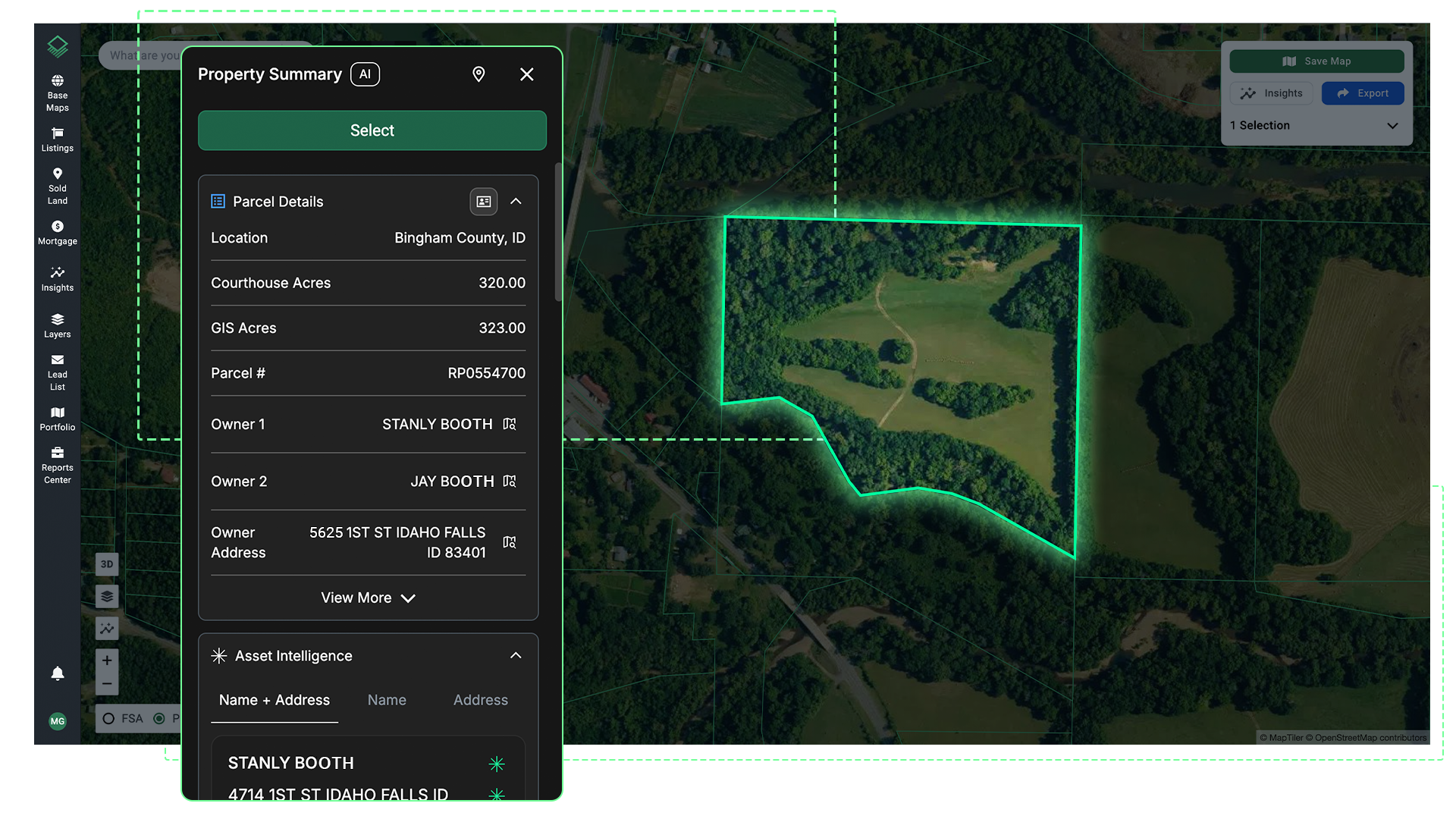
Rather than piecing together flood zone data, ownership records from a county assessor, and zoning rules from a separate planning portal, Acres consolidates ownership, parcel details, and zoning into one connected view. That consolidation matters when you are evaluating multiple parcels quickly and need every data point in the same place before committing to further due diligence costs.
Step 5: Understand Your Land Financing Options
Raw land financing differs meaningfully from a standard home mortgage. Lenders can treat vacant land as a higher-risk asset, which affects rates and terms. Here are the main paths buyers use:
- Raw land loans: typically require 20-50% down payments and carry interest rates 1-2% higher than conventional mortgages, with repayment terms of 10-15 years.
- Improved lot loans: available when the parcel has utilities and road access in place, often with better terms than raw land loans.
- Owner financing: a direct arrangement with the seller, bypassing most bank qualification requirements and sometimes available with more flexible terms.
It’s recommended to compare multiple financing sources before committing to a structure.
Step 6: Make an Offer and Negotiate Terms
Once due diligence confirms the parcel fits your goals, make an offer that reflects what you have learned. Negotiation on land often includes more than price. Ask for contingencies covering survey results, title clearance, and financing approval. A reasonable earnest money deposit signals seriousness without overcommitting capital before every contingency clears.
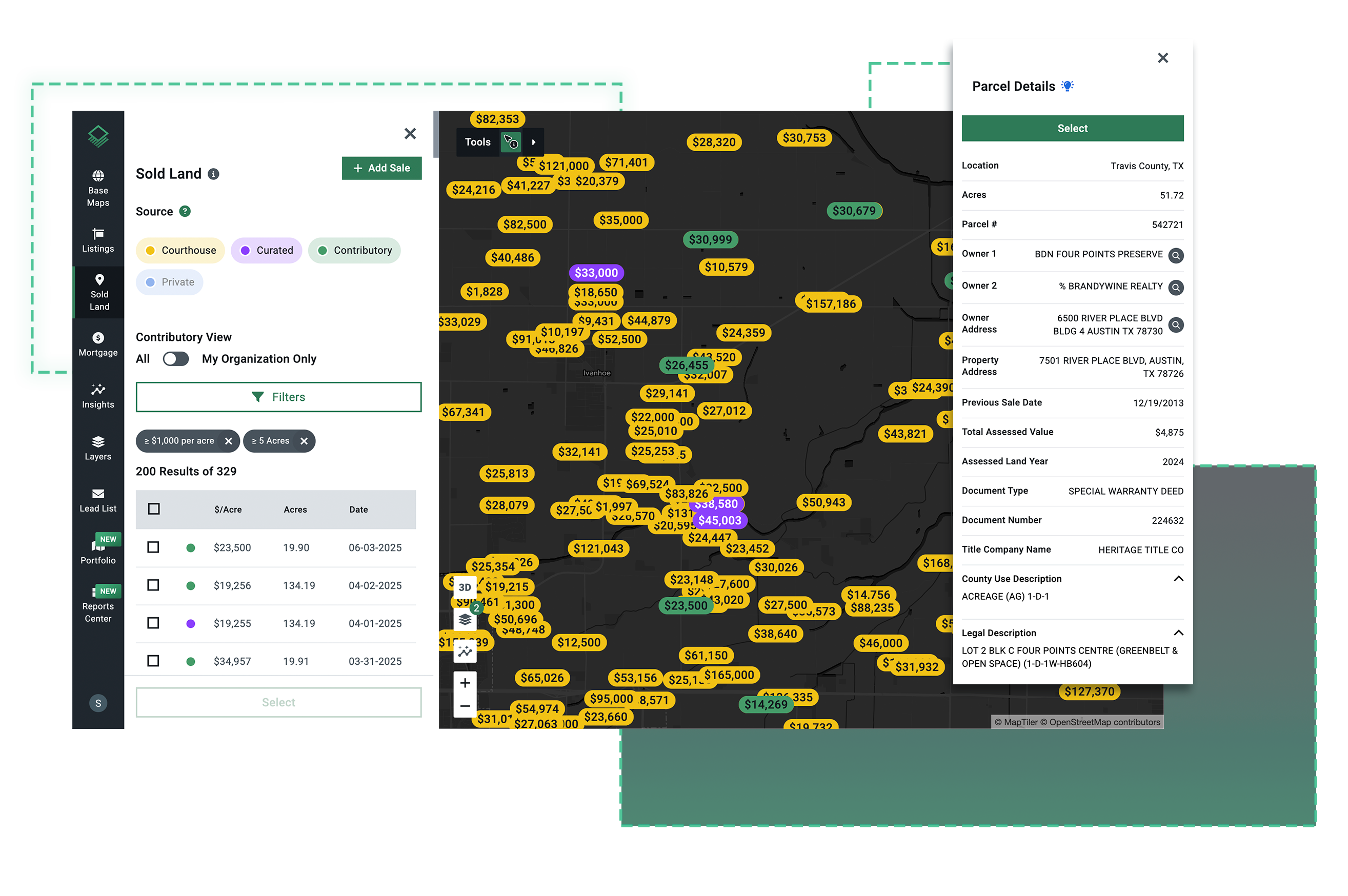
Review comparable sales in the same county or market area before anchoring on a price. Land comps require knowing acreage, access, zoning classification, and recent sale dates - not just square footage.
With Acres:
Leverage the most extensive, accurate land sales data available to run comparable sales checks and evaluate value with unprecedented speed and confidence.
Step 7: Close and Record the Deed
Closing a land purchase follows a similar sequence to a home purchase, with a few differences. A title company or real estate attorney typically manages the closing, handles the transfer of funds, and records the deed with the county. Confirm before closing that all contingencies have been satisfied, all survey and title issues have been resolved, and the deed will reflect the correct legal description of the parcel.
Once the deed is recorded, the land is yours. Keep copies of the title policy, deed, survey, and any easement documents. These become part of the chain of title and will matter the next time the parcel is sold or developed.
How Acres.com Supports the Land Purchase Process
With coverage on over 150 million parcels nationwide, Acres brings ownership, parcel context, zoning, and thousands of data layers into a single platform — so buyers can run searches, analyze markets, and qualify parcels in minutes rather than hours.
Land buyers use Acres to confirm access, check classification, review parcel boundaries, and more, before visiting a property. Teams use it to compare multiple parcels side by side and track deal pipelines across markets.
Whether you are buying a single rural parcel or building a portfolio of land investments, Acres gives you the data to move faster and with more confidence at every step.
Key Takeaways for Land Buyers
Buying land starts with clear goals and a realistic budget that accounts for more than the purchase price. From there, the process moves through parcel search, zoning verification, thorough due diligence, and the right financing structure before any offer is made. The land purchase process rewards preparation: buyers who understand title, access, zoning, and environmental factors before they negotiate close faster and with fewer surprises.
The most practical step you can take right now is to research any parcel you are considering from every data angle before spending on surveys or inspections. That front-loaded research is where land opportunities get qualified or disqualified most efficiently.
Ready to start your land search? Connect with our team to see how Acres can support your buying research process.