Buy Land
How to Buy Land: 7 Steps to Get Started
Ready to start the land purchase process? Learn how to set your budget, research zoning, run due diligence, and close confidently - step by step.
A step-by-step land purchase due diligence checklist for homebuilders. Cover title, zoning, utilities, environmental risk, and more, all faster with Acres.
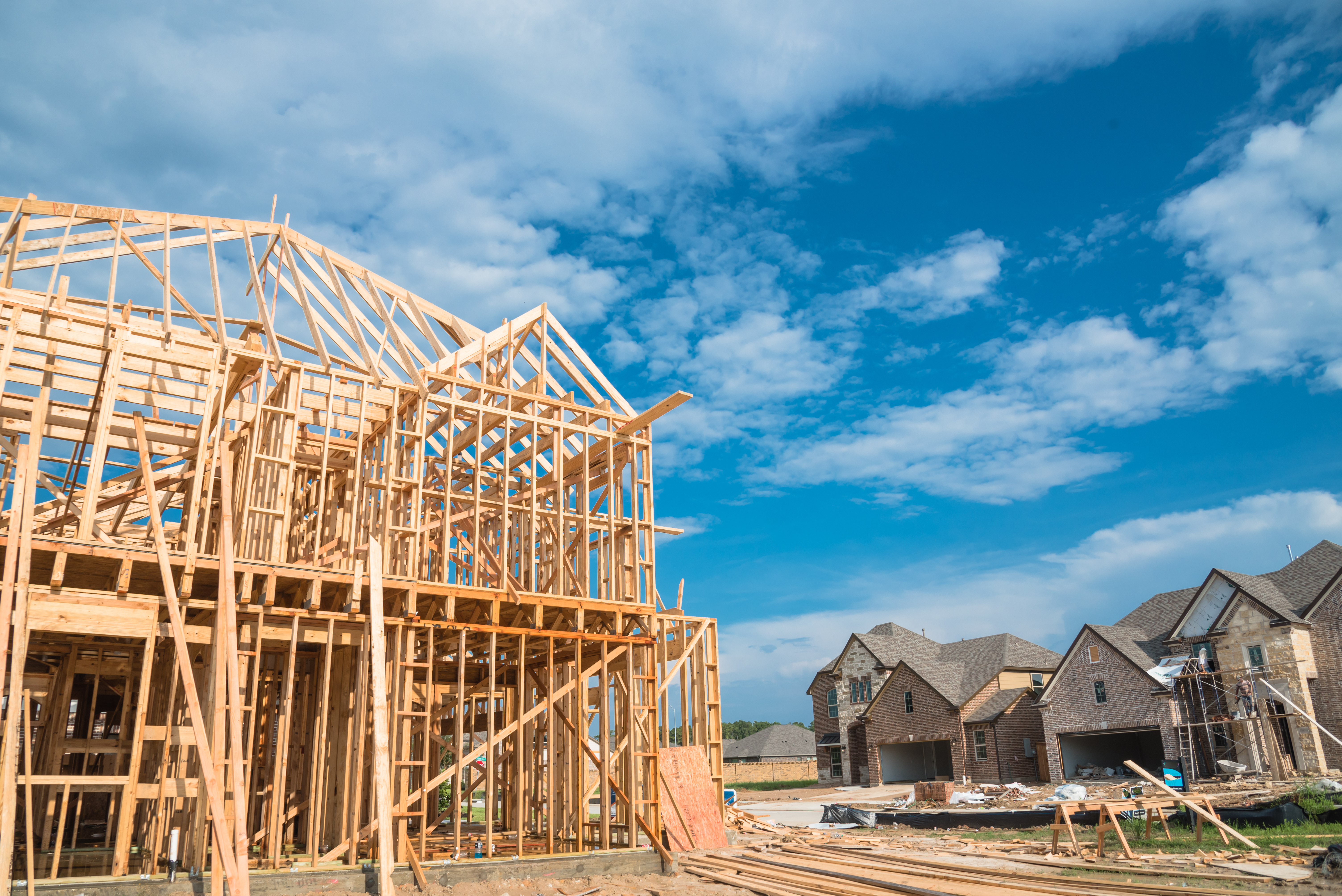
Most land deals that fall apart don’t collapse at the negotiation table, they unravel weeks later. The breakdown comes during title review, after a zoning variance is denied, or when a geotechnical report surfaces a problem no one caught early enough.
For homebuilders, raw land is one of the highest-risk assets on the balance sheet. Get the acquisition wrong, and the margin on every lot that follows takes the hit. Get it right, and you move faster than competitors still pulling records by hand. Homebuilding teams that consolidate parcel data, zoning, flood risk, and ownership into one workflow catch problems sooner and qualify sites in a fraction of the time.
This checklist walks through every stage of a land purchase due diligence checklist built specifically for homebuilders, from initial site screening to closing. Use it to qualify deals quickly, flag risk early, and reduce the chance of missing a critical step.
Why Do Homebuilder Land Acquisitions Fail?
Phase 1: Site Identification and Initial Screening
Phase 2: Title and Ownership Review
Phase 3: Zoning, Entitlement, and Land Use
Phase 4: Environmental and Physical Site Review
Phase 5: Utilities and Infrastructure Capacity
Phase 6: Financial Underwriting and Deal Structuring
How Acres Streamlines Land Acquisition Due Diligence
Homebuilder Due Diligence Final Thoughts
Homebuilders frequently operate under compressed timelines and narrow margins. A missed easement or an overlooked flood zone designation can delay entitlement by 12 to 18 months, or kill a project entirely.
The USDA reports that land values in key U.S. development markets have increased significantly over the past decade, meaning the cost of a bad acquisition is higher than ever. At the same time, the complexity of a thorough real estate due diligence checklist has grown: environmental regulations, infrastructure requirements, and municipal approval processes vary widely from county to county.
Builders relying on fragmented data sources introduce unnecessary risk into every deal. They pull parcels from one system, zoning from another, and ownership from a third. A complete real estate due diligence list has to be applied consistently, across each site, each time it is evaluated. Anything less and teams are betting margin on memory.
The first phase of property due diligence is about qualifying the opportunity. Not every parcel that looks right on a map is ready for development.
Key steps at this stage:
With Acres: Ownership records, parcel boundaries, zoning designations, assessed land use, mortgage data, and transaction history are available in a single parcel view. No county portal switching required.
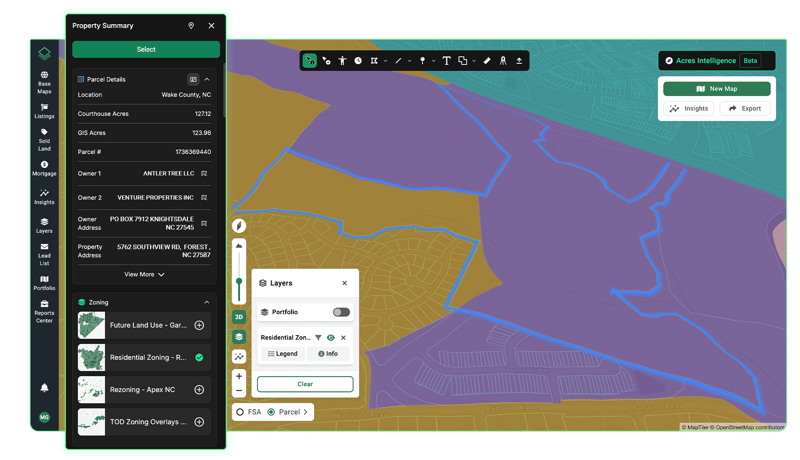
A clean title is the foundation of any real estate development due diligence checklist. Title issues are among the most common reasons deals fail after the letter of intent is signed.
Due diligence documents in real estate to collect and review at this phase:
If the title report flags any exception that is not standard, do not proceed until it is cleared. An insured title alone does not eliminate risk, it shifts it.
Zoning review is where most homebuilders either confirm a fast path to permits or discover the real work ahead.
If a zoning change or conditional use permit is required, build that timeline into your underwriting before closing.
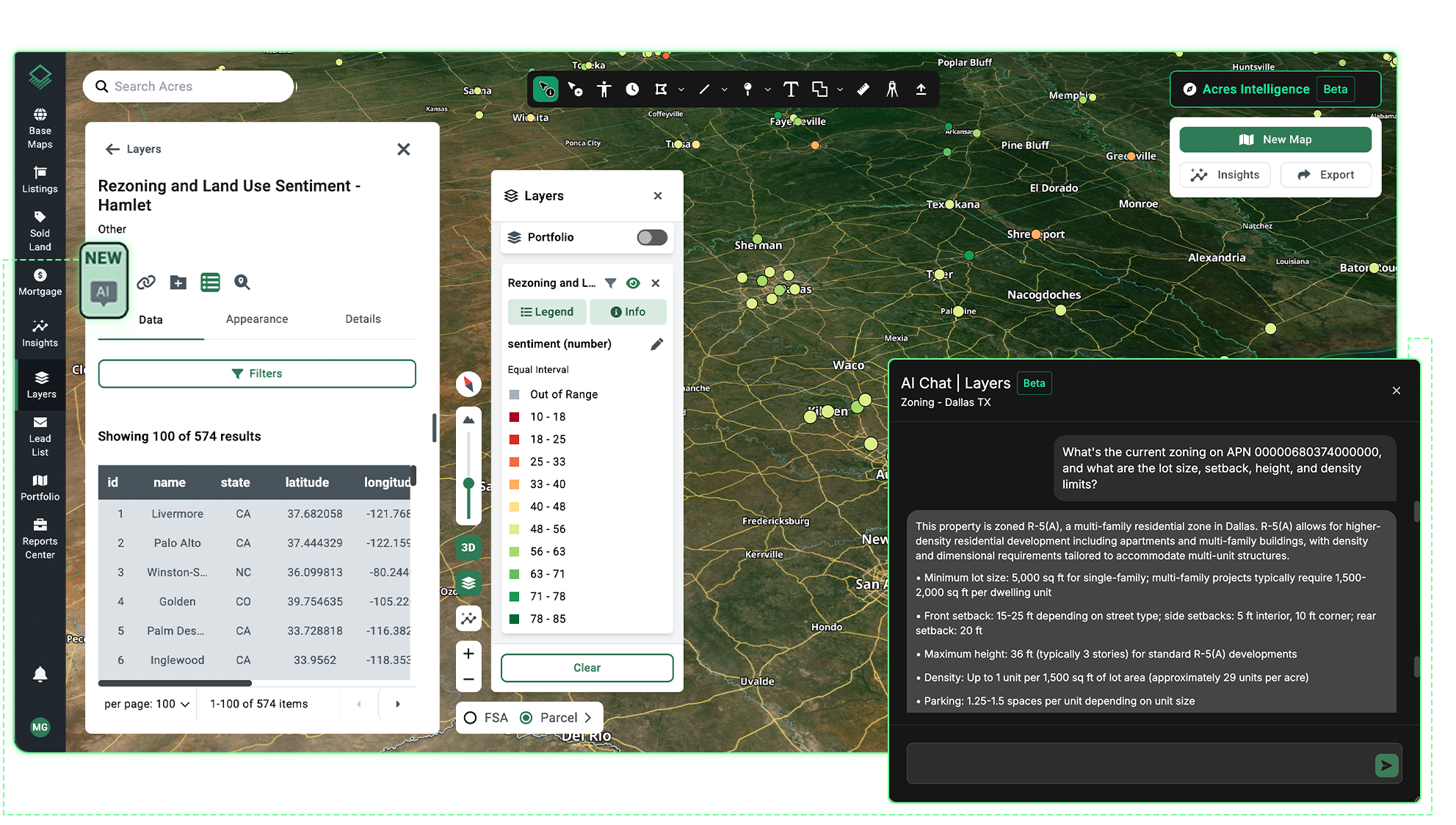
With Acres: Leverage land use sentiment data to gauge local opinions on rezoning and use the zoning AI chat to get instant answers on complex zoning setbacks and restrictions.
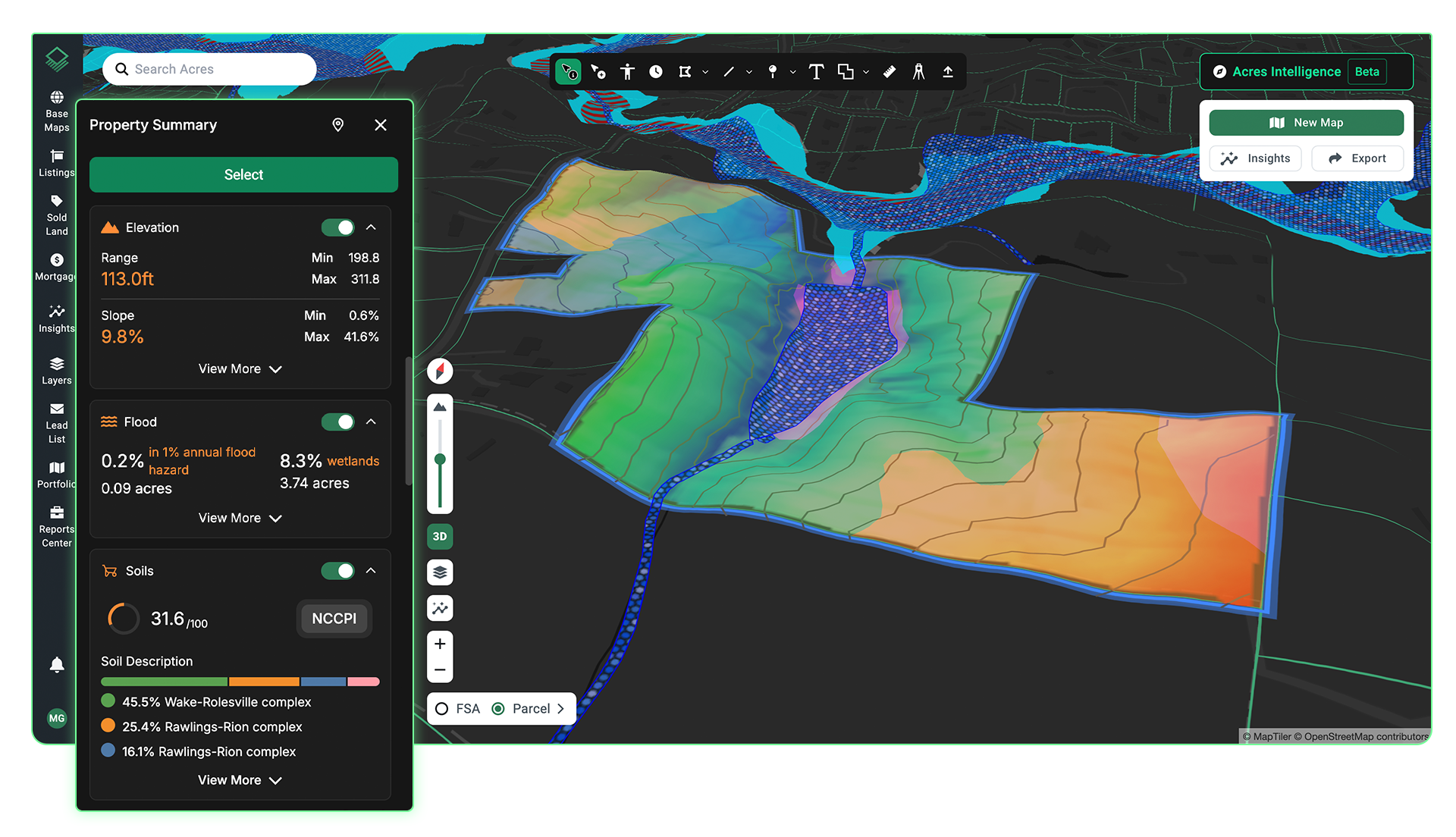
Environmental review is the phase where undisclosed problems surface most often. A solid land development due diligence checklist treats this phase as non-negotiable.
A parcel with clean title and solid zoning can still fail underwriting if utilities are too far away. Check each of the following with the responsible agency:
With Acres: Access utility and power layers to visualize roads, access, sewer lines, school districts, local water supply facilities, and more, nationwide.
The final phase of a due diligence checklist for buying a property is turning everything you have learned into a number the deal either supports or it does not.
Homebuilding teams using Acres approach this checklist differently than teams working across fragmented data sources. Ownership verification, zoning review, flood zone screening, soil data, and parcel history are all available in a single platform. The data stays updated across more than 150 million parcels nationwide.
Acres unifies the data layers that traditionally required separate vendor relationships. Rather than pulling records from five separate county websites, builders can follow this checklist and utilize Acres to save time, money, and capital.
For teams running a high volume of acquisitions, that speed compounds. Deals that would have taken two weeks to screen can be qualified or disqualified in a day.
A rigorous land purchase due diligence checklist is a competitive advantage. Builders who catch title issues early, understand entitlement risk before closing, and price infrastructure costs accurately make better acquisition decisions and protect margin at scale.
The six phases above cover the full lifecycle from site screening through financial underwriting. Work them in order, document what you find, and treat anything you cannot verify as a risk that needs to be priced.
Builders moving quickly in competitive land markets tend not to cut corners on diligence. They run it faster with better data.
Ready to accelerate your site selection? Contact our team to see how your acquisition team can screen, qualify, and secure land deals faster with Acres.

Ready to start the land purchase process? Learn how to set your budget, research zoning, run due diligence, and close confidently - step by step.
Learn how to search land for sale by map, filter by location, size, and zoning, and find vacant land listings near you. A step-by-step guide to...
Discover how to select the ideal build site for your next project with our step-by-step checklist for successful land development.