Many landowners have no idea what their property is actually worth. Whether selling, refinancing, settling an estate, or simply making a smart hold-or-sell decision, knowing your land's value changes everything.
Land does not price itself the way a house does. There is no automated estimate for raw acreage. Location, soil quality, zoning, access to utilities, and nearby comparable sales all feed into the number. Acres.com pulls all of that data into one place so you can calculate property value for any parcel without piecing it together from five different sources.
Why Land Value Is Harder to Calculate Than Home Value
Land is America's largest asset class, yet it remains one of the least transparent markets in real estate.The USDA NASS reports that average U.S. farm real estate reached $4,170 per acre in 2024, up 5% from the prior year, but that national figure masks wide regional variation that makes national benchmarks nearly useless for individual parcels.
This creates a real challenge for landowners trying to figure out how to know the valuation of land they own. Most online valuation tools pull data from MLS listings and home sales, neither of which reflects the land market well. Raw land, timber parcels, agricultural ground, and rural tracts require different data inputs and different methodologies.
The result is landowners frequently underpricing when selling, overpaying when buying, or missing opportunities because they could not determine value fast enough. The solution starts with knowing where to look and what to look for.
How to Calculate Property Value for Land: 5 Steps
Step 1: Pull Your County Assessor Record
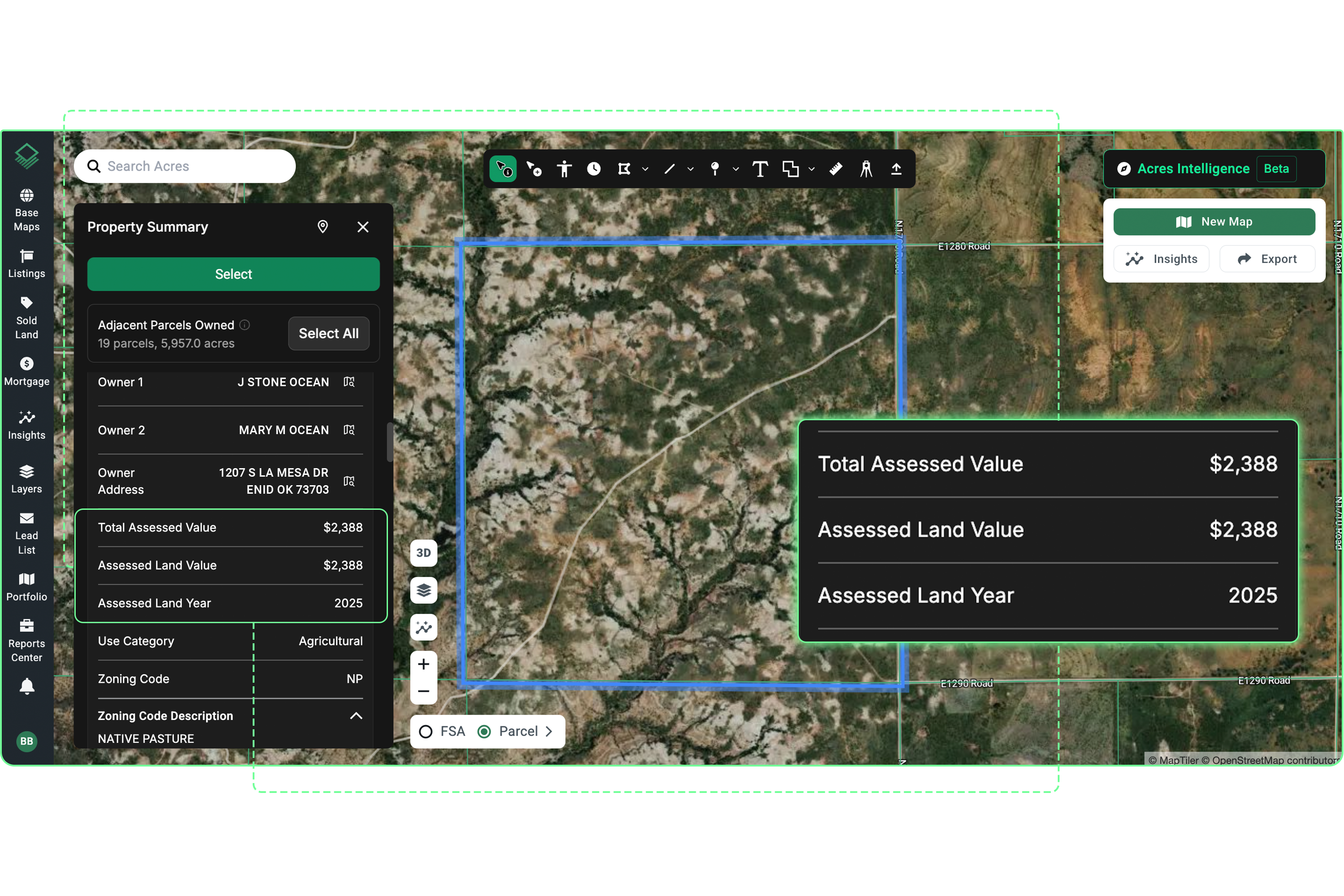
Your first stop is the county assessor's office. In most states, that data is now searchable online. Search for your county's assessor property portal, enter your parcel number or address, and you will see the assessed value the county has on file.
Keep in mind: assessed value is not market value. Counties typically assess property at a fraction of fair market value and those figures can lag the actual market by years. Assessment practices vary by jurisdiction, meaning the assessed-to-market ratio is not consistent even within a single state.
Assessed value gives you a baseline. It also surfaces key parcel data: acreage, zoning classification, legal description, and any exemptions such as an agricultural exemption that reduces taxable value. Use this as your starting point, not your final number.
Step 2: Find Comparable Sales to Calculate Market Value of Property
Comparable sales, or comps, are the most reliable method for calculating land value. The principle: what did similar parcels in the same area sell for recently?
When evaluating comps, adjust for the differences that matter: total acreage, soil productivity, road frontage, water access, zoning, and proximity to town. A 50-acre timber parcel with no road access should not be priced off a 50-acre tillable farm comp. Aim for at least three to five recent sales within the last 12 to 24 months.
With Acres: Search over 150 million parcels nationwide and surface comparable land sales. Rather than manually pulling deed transfers from county recorders and cross-referencing state databases, Acres brings parcel-level sales data directly into your research workflow.
Step 3: Check Zoning and Land Use Restrictions
Zoning directly affects what your land can be used for, and therefore, what it is worth. Residential zoning in a high-growth corridor can make land worth multiples of adjacent agricultural ground. Conservation easements or wetland restrictions can reduce developable value considerably.
Understanding the permitted uses for your land (residential, commercial, agricultural, industrial, or mixed) is required before you apply any valuation methodology. Land in a rezoning pipeline can be worth considerably more than its current assessment suggests.
Step 4: Assess Environmental and Physical Factors
Property valuation for land goes beyond what is on the surface. Environmental factors can move value in both directions.
Soil Quality
For agricultural and rural land, soil productivity is a major value driver. The USDA NRCS Web Soil Survey assigns a Capability Class and Productivity Index to soils across the country. Class I and II soils command premium prices in grain-producing regions. Class V through VIII soils, rocky, wet, or highly erosive, are valued primarily for timber or recreational use.
Flood Risk
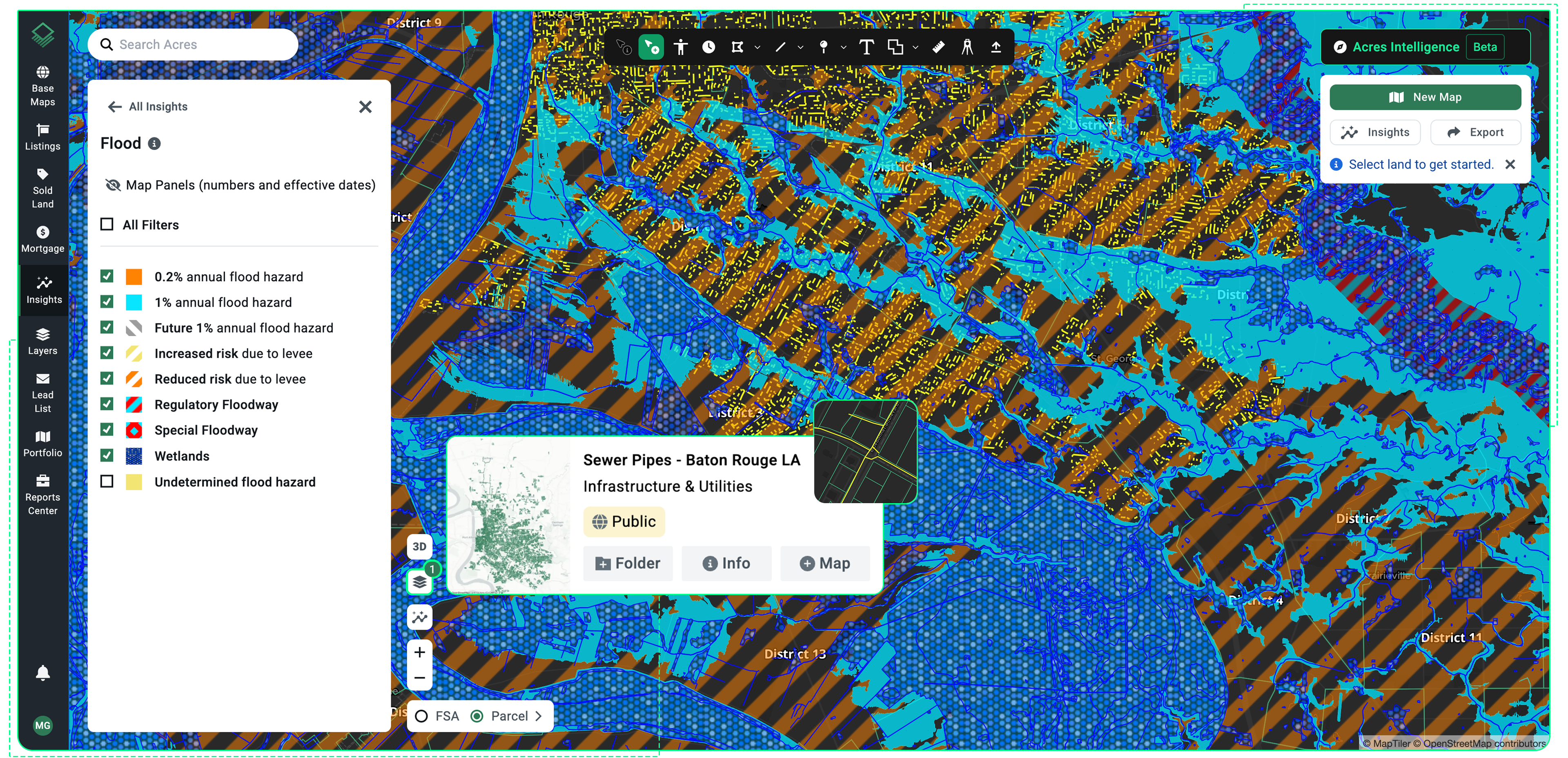
Flood zone designation affects both value and insurability. Land in FEMA Special Flood Hazard Areas carries real restrictions on development and financing. Check your parcel for flood zone classification and factor that into your value estimate accordingly.
Access and Infrastructure
Landlocked parcels with no legal road access are worth a fraction of comparable land with frontage. Access to water, electricity, and sewer or septic capacity also affects both value and development potential. If your parcel lacks any of these, adjust your comps downward to reflect the difference.
With Acres: Rather than pulling soil data from USDA, flood zone information from FEMA records, and ownership history from a county assessor portal, Acres consolidates ownership, parcel characteristics, zoning, and land data into one connected view—so you can move from research to a value estimate without switching tabs.
Step 5: Know When You Need a Formal Appraisal
An online estimate is a starting point. For transactions involving financing, estate settlement, legal disputes, or significant dollar amounts, you will want a Certified General Appraiser who specializes in rural or agricultural property.
MAI-designated appraisers from the Appraisal Institute and accredited rural appraisers from the American Society of Farm Managers and Rural Appraisers are the two credentials most recognized for land valuation.
The cost of a formal appraisal - typically $1,500 to $5,000 for rural parcels[5] - is almost always worth it when the stakes are high. For quick directional estimates or prospecting, the steps above will get you to a reliable range.
For more on how to value land across different parcel types, see land valuation tools on Acres.
How Acres.com Supports Land Valuation Research
Most of the steps above—pulling assessor records, finding comparable sales, checking zoning, reviewing soil and flood data—require piecing together information from five or more sources. Acres consolidates all of it into a single platform built specifically for land data transparency.
With Acres, you can search any parcel by address or map location and immediately surface ownership records, zoning classification, parcel characteristics, and comparable land sales without switching tabs or cross-referencing county websites. Land buyers, sellers, and professionals use Acres to build reports in minutes and make faster, more confident valuation decisions.
The Bottom Line on How to Calculate Property Value for Land
Calculating land value requires more than a quick online search. Start with your county assessor record as a baseline, then build a picture using comparable sales, zoning analysis, soil and environmental data, and infrastructure factors. Free tools can surface critical data points, but none of them were built for raw land specifically.
For high-stakes decisions - selling, financing, or estate planning - a certified rural appraiser is the most reliable path to a defensible number. For everything in between, knowing how to know the valuation of land starts with accessing the right data and understanding what each factor means for your specific parcel.
Ready to see what your land is worth? Explore your parcel on Acres.com.