Property Rights
How to Find Property Lines
Discover how to find property lines for free with Acres, when to hire a surveyor, and when each method is the right choice.
Learn how to find your property lines online using free tools, county records, and satellite maps. Discover how to locate property lines fast with a property lines map.
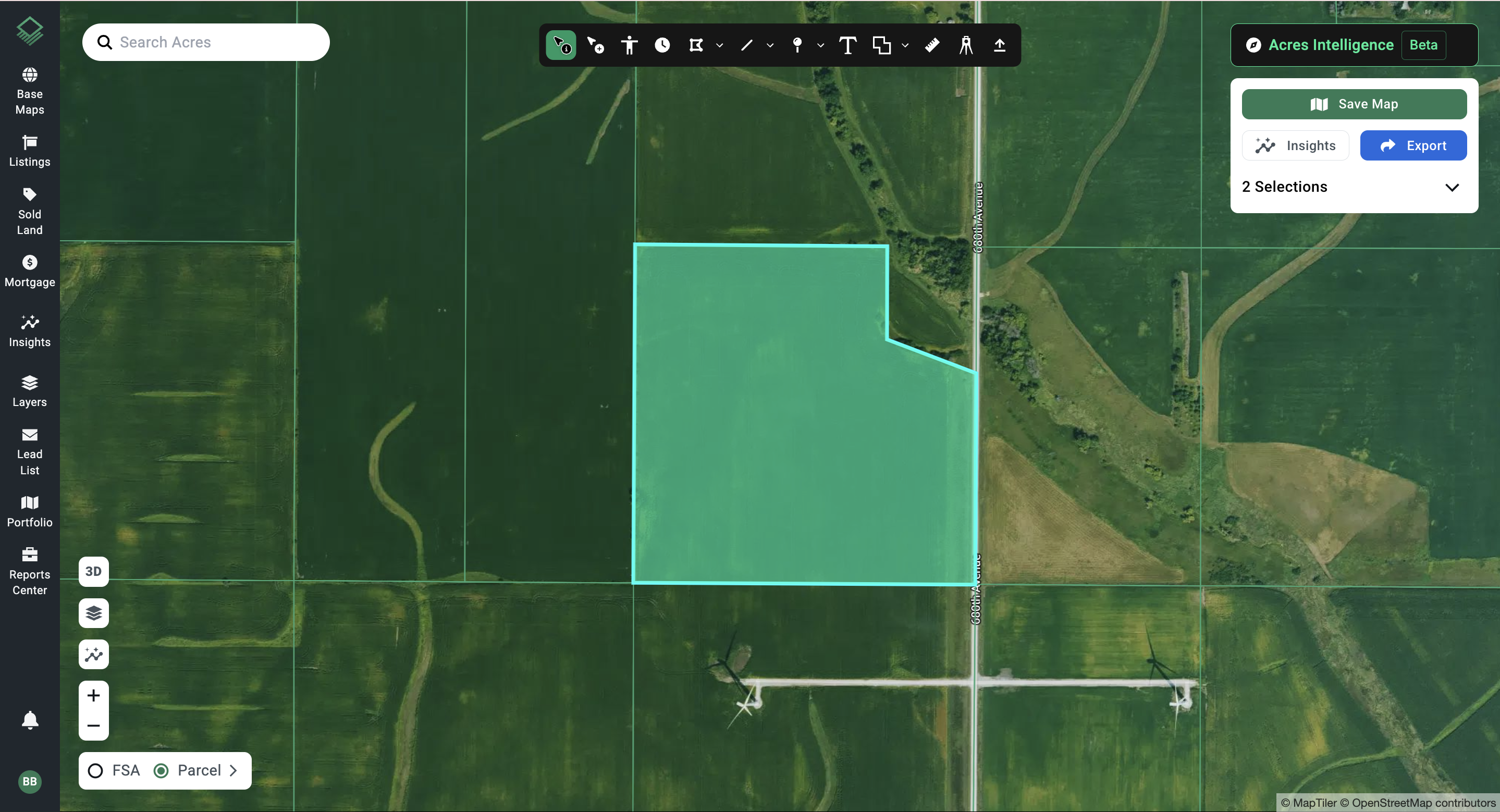
Many landowners cannot point to their exact property boundary on a map. That gap can create expensive problems, from fence disputes and encroachments to failed permits and stalled deals. Before you break ground, build a fence, or negotiate a sale, you need to know where your land actually ends.
This guide walks you through the most reliable ways to find your property lines online, so you have the confidence to act on what you own. Platforms like Acres.com pull parcel boundary data from county assessors across the country, so you can move from an address to a complete property boundaries map without opening a single government portal.
Property boundary disputes are one of the leading causes of neighbor litigation in the United States. Title and boundary issues routinely delay or derail real estate transactions, affecting buyers, sellers, and land professionals at every stage of a deal.
The challenge is that legal lot lines and visible landmarks rarely match. Fences drift. Trees are removed. Survey stakes get pulled or buried. Unless you know how to locate property lines using official records, you are working from guesswork.
For landowners, buyers, and land professionals, understanding your property boundaries map, and knowing how to find it, is the first step to protecting every decision you make with that parcel.
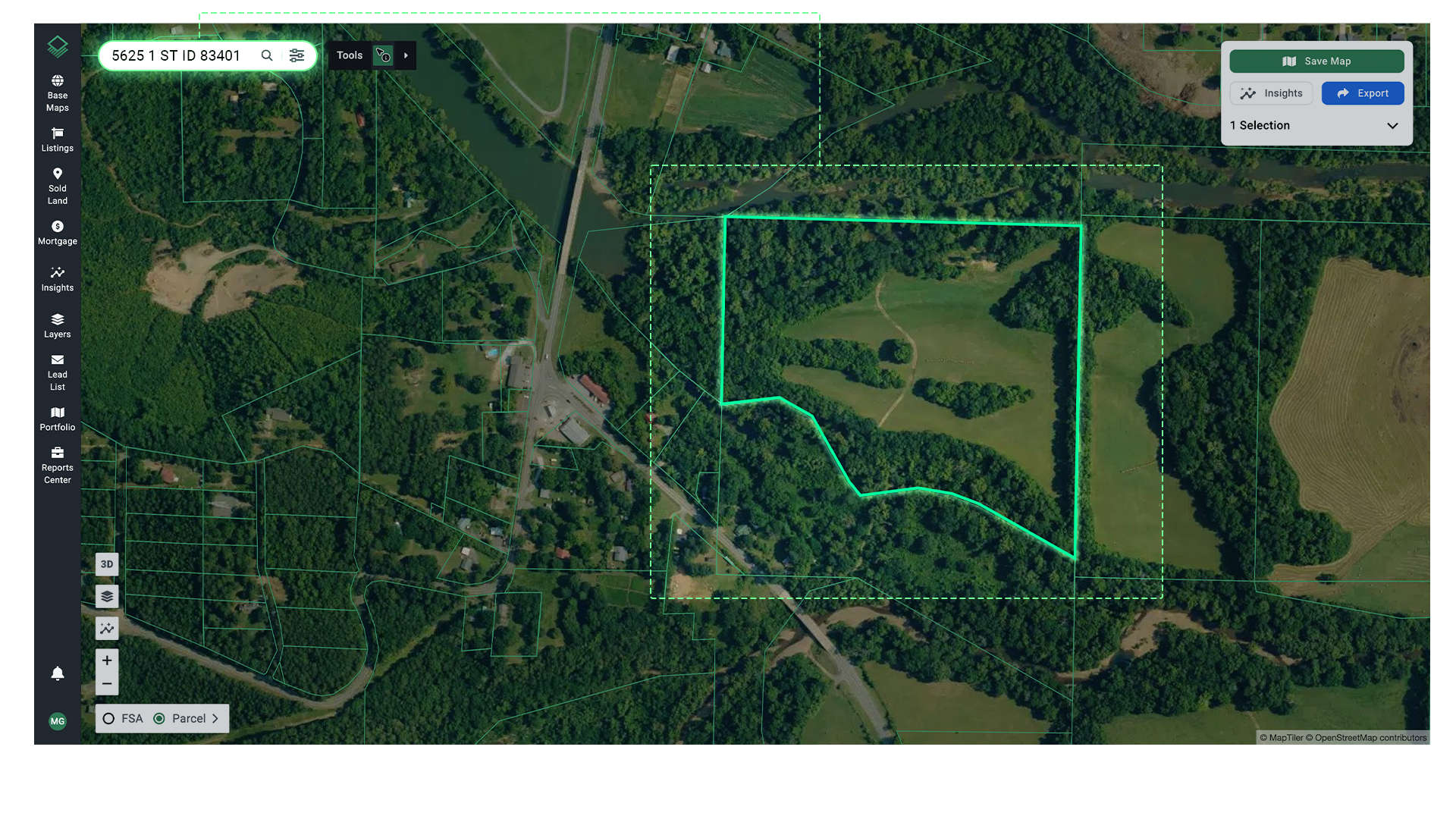
There is no single universal source for property boundaries in the U.S. Records are maintained at the county level, which means your best approach depends on where the parcel is located. Here are the five most effective methods, from free tools to professional resources.
The fastest way to view property maps with property lines is through a platform that has already aggregated county assessor data, plat records, and ownership information into a single searchable interface. Rather than navigating separate county portals, you get parcel boundaries layered on satellite imagery the moment you enter an address.
With Acres: Search any parcel on the Acres map to view property boundaries, ownership data, acreage, and adjacent landowners in one place. Acres aggregates records across more than 150 million parcels, so you can move from an address to a complete property boundaries map without opening a county portal.
The most authoritative document defining your property line is the recorded plat or survey on file with your county recorder's office. Plat maps show the exact dimensions and angles of each lot within a subdivision, including easements and setbacks.
To access these documents, search your county recorder, register of deeds, or clerk's website by parcel number or property address and download the recorded plat or subdivision map as a PDF.
Note that plat maps show legal dimensions but are not georeferenced. They do not align to a satellite map automatically. You will need a GIS layer or a licensed surveyor to translate those measurements to the ground.
One of the most searched tools landowners want is a satellite map that shows property lines, an aerial or topographic view with parcel boundaries overlaid. This combination gives you both the visual context of the land and the legal boundary at the same time.
When evaluating any property lines map tool, check:
For metes-and-bounds descriptions common across the South and rural U.S., property boundaries are defined by directional calls and distances rather than subdivisions. These require the Public Land Survey System as the framework.
For rural and federal-adjacent parcels, federal cadastral survey records cover most of the western and central United States and are useful for cross-referencing survey sections and townships in Public Land Survey System states. The U.S. Census Bureau also maintains georeferenced parcel-level geographic data that can be imported into GIS software to build a land ownership map for any county in the country.
These federal resources are particularly useful when tracing ownership of large rural parcels, identifying federal land adjacent to or overlapping private land, or building a baseline geographic framework for a complex parcel.
Acres brings this type of context, ownership history, parcel boundaries, and adjacent landowner data, into a single view so you are not piecing together information from multiple government databases.
Online tools and county records are powerful starting points, but they are not legally binding for construction, fencing, or dispute resolution. If you need to establish exact lot lines for any legal purpose, a licensed land surveyor is required.
A boundary survey physically locates and marks the corners of your parcel based on the recorded legal description. This is the only method that produces a document usable in court or presentable to a lender for a construction loan.
Gather parcel data and orient yourself using digital tools first. Then bring that research to a surveyor to reduce the hours, and the cost, of the engagement.
Your property deed contains the legal description of your parcel, the written definition of your boundaries. There are two main formats.
Lot and Block: Common in subdivisions. References a recorded plat map by lot number and block. Example: "Lot 14, Block 3, Sunset Ridge Subdivision, Filing No. 2." Look up the plat at your county recorder to find the exact dimensions.
Metes and Bounds: Common in rural and older properties. Uses distances and compass bearings from a point of beginning. Example: "N 45 degrees 22 minutes E, 210 feet, thence..." Requires a surveyor or GIS software to translate to a map.
Your deed is available at the county recorder's office or through your title insurance policy. Reading the legal description alongside a property boundaries map on Acres is a reliable way to cross-reference what the deed describes against current parcel data.
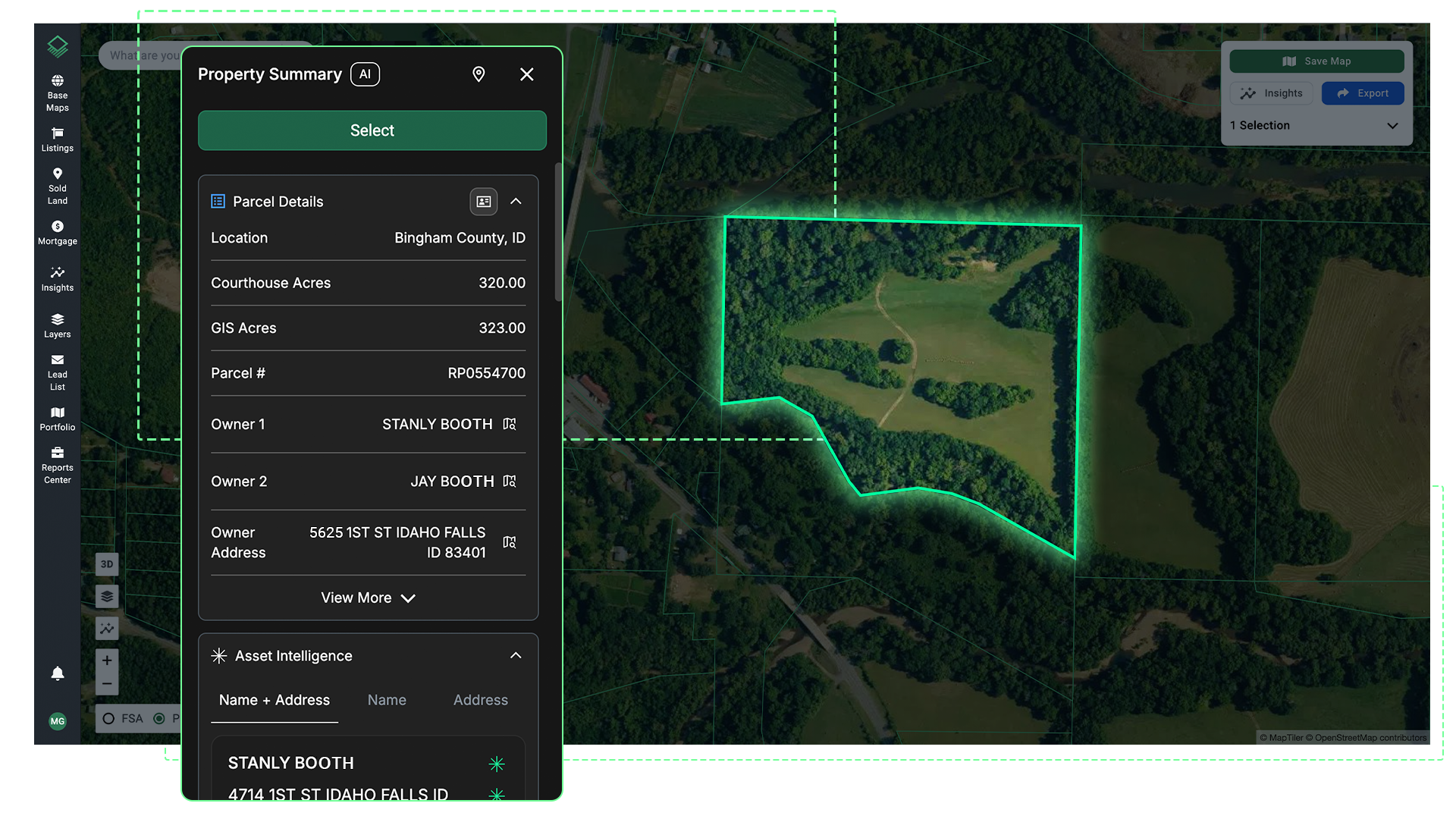
Acres aggregates property boundary data from county assessors and public records across the U.S., displaying parcel lines directly on an interactive map alongside ownership information, acreage, zoning, and environmental layers. Land professionals use Acres to move from an address to a complete property boundaries map in seconds, without bouncing between county portals.
Acres users can layer ownership data on satellite imagery, pull parcel-level details, and identify adjacent landowners. All from one platform with the most recent, relevant land data available across over 150 million parcels. For teams doing prospecting, due diligence, or portfolio management at scale, that speed translates directly to faster decisions and fewer missed opportunities.
Property lines are not always where you think they are, and assuming otherwise can cost you time, money, and legal standing. The most reliable path starts with aggregated parcel data in a complete land research platform, cross-referenced against your county's recorded plat map and your deed's legal description.
For rural or complex parcels, federal cadastral records and the Public Land Survey System can add more critical geographic context. When exact lines matter for legal, construction, or financing purposes, a licensed surveyor remains the definitive answer.
The clearer your boundary picture before you act, the less likely you are to inherit someone else's problem.
Connect with our team and see how you can use Acres to view property boundaries, ownership data, and parcel context, all in one place. No county portal hopping required.

Discover how to find property lines for free with Acres, when to hire a surveyor, and when each method is the right choice.
Learn how land mapping and parcel search work online. This step-by-step guide covers property boundaries, ownership lookup, zoning layers, and how to...
Learn how to read property values on a map effectively, understand key factors influencing land value, and make informed decisions with Acres.com.