For most acquisition teams, transportation projects operate in the background — influential, yes, but rarely clear enough to act on with conviction. Infrastructure planning data is scattered across DOT portals, years of archived PDFs, and local agency announcements that surface long after the market has already moved.
Which means one thing: A corridor can shift before anyone realizes it.
And in a market where land positions are secured years ahead of demand, missing the early signal on infrastructure can cost a builder the exact parcel that defines their long-term pipeline.
That’s exactly what happened in this case.
Case Study: The Parcel That Became a Missed Opportunity
A builder passed on a suburban parcel just outside a growing interchange. Early underwriting showed potential, but the team believed demand was still multiple years out. Without clearer signals on timing, they deprioritized the site and moved on.
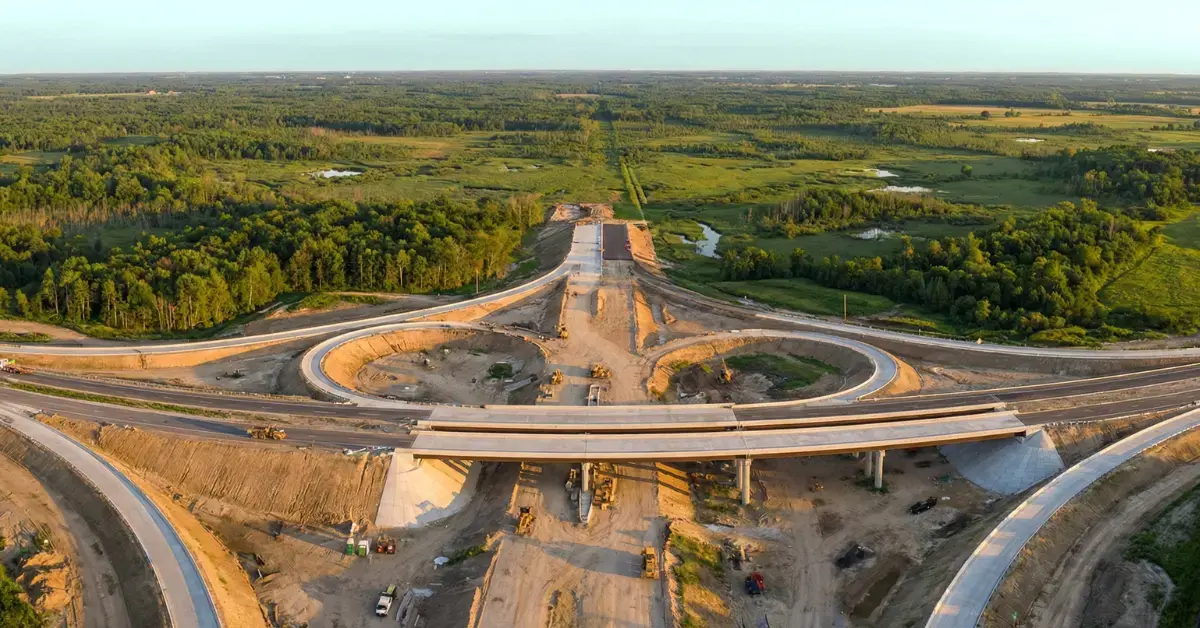
Six months later, the state announced a major highway expansion at that same interchange — a mobility project large enough to redraw commuter patterns and unlock the entire submarket.
Another builder acted immediately, picking up the parcel and securing a foothold in what is now one of the region’s fastest-developing corridors.
The first builder didn’t misread the market; they simply didn’t have visibility into the transportation upgrade that would change everything.
This is the challenge builders face nationwide: By the time infrastructure news becomes public, the window to buy at the right price has already closed.
Where Builders Are Seeing It Early: Lessons from Raleigh
The greater Raleigh-Durham region is one of the clearest examples of how early infrastructure insights shape future land positions. According to the Acres Home Builder Index, the area has seen steady expansion as top builders collectively secured thousands of acres over the past several years.
A closer look at that activity shows a pattern: Builders are concentrating around corridors tied to transportation upgrades and future mobility enhancements.
What the acreage and activity reveal:
- Builders have assembled several thousand acres across the metro in the past five years.
- Growth is radiating into suburban and rural edges — areas like Wake Forest, Middle Creek, and parts of Johnston and Franklin Counties.
- Much of this land sits near announced or planned improvements to I-540, NC-42, and US-64.
Highway projects like the I-540 loop aren’t just easing congestion — they’re reshaping where demand will be strongest. Builders who can see these patterns early are securing land long before the rest of the market reacts.
How Acres Helps Builders Anticipate Where Demand Is Heading
Acres brings together the layers that matter for long-term planning — infrastructure, transportation upgrades, utility expansions, population projections, and active builder activity — into one map-based interface.
With Acres, teams can:
- Identify corridors unlocked by upcoming highway expansions
See where DOT projects will open new access, improve connectivity, or shift commuter routes.
- Evaluate utility readiness before a parcel becomes competitive
Water and sewer availability can accelerate timelines — or stall them. Acres surfaces that information upfront.
- Pinpoint where builders are already assembling positions
The Home Builder Index tracks real-time builder acquisitions (including those hidden behind LLCs), revealing movement before it shows up in comps or permits.
- Predict which parcels will appreciate before the market re-rates
By layering infrastructure plans with builder behavior and population growth, teams can find high-potential sites before values climb.
When teams can see infrastructure and market signals in the same view, they don’t chase growth — they get ahead of it.
The Takeaway
Every growth corridor has a catalyst. The teams that win are the ones who spot it early.
With connected infrastructure intelligence, builders can identify the parcels that will be unlocked next — and secure their positions while the window is still open.