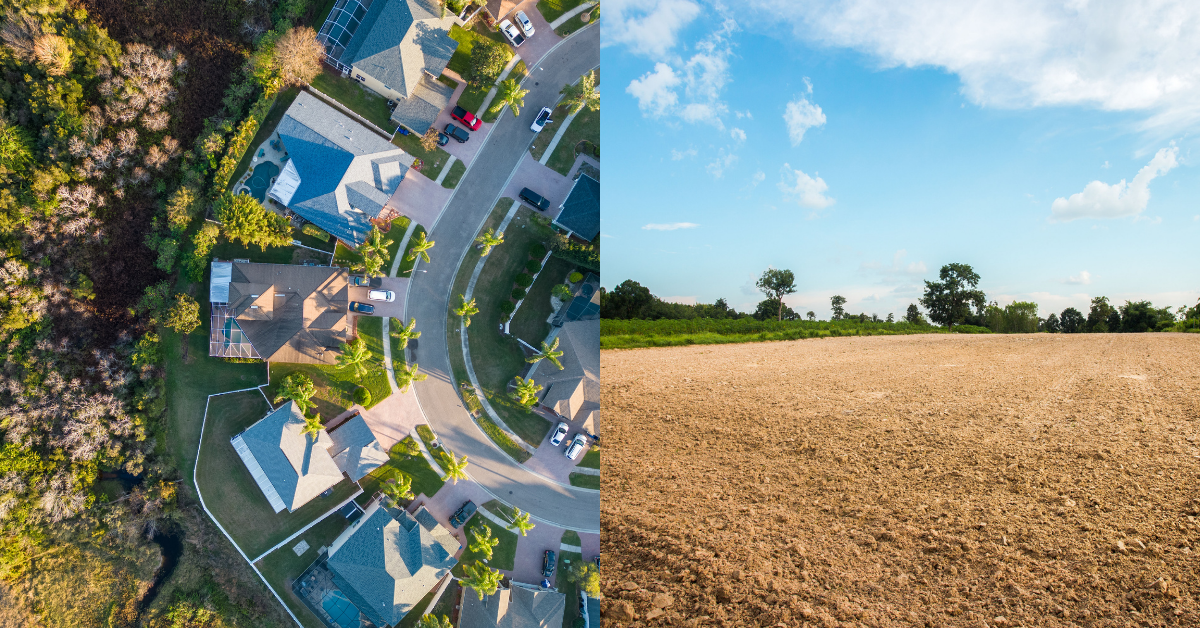
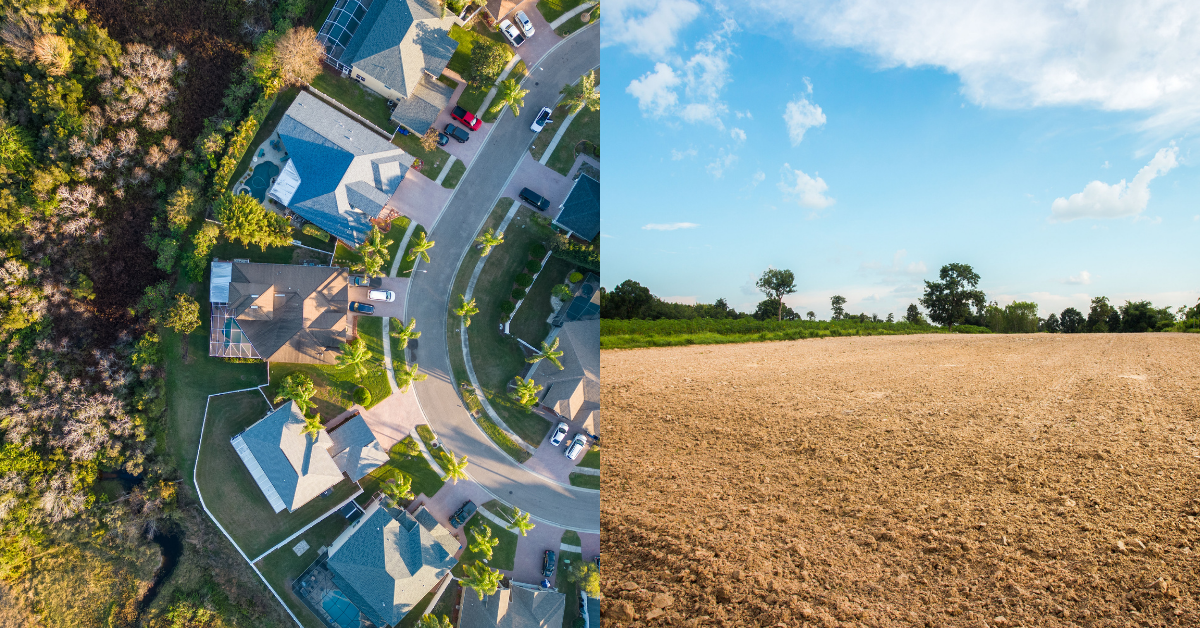
Raw land is completely undeveloped property with no utilities, structures, or road access. Developed land has been improved with infrastructure such as roads, utility connections, and site preparation, making it ready for construction or immediate use.
The difference between the two shapes every decision that follows: how you finance a purchase, what you can build, what it costs to make the land usable, and how long it takes to generate value.
When comparing two same-sized parcels in the same county where one is priced at $3,000 per acre and the other at $18,000, first-time buyers often assume the cheaper option is the better deal, but that steep price gap exists for a reason.
Understanding the raw land vs. developed land distinction before any offer is written is the foundation of a sound buying decision. Acres.com gives buyers the parcel-level data to evaluate both types before any money changes hands.
Contents
Why First-Time Buyers Blur the Line Between Raw and Developed Land
What Is Raw Land?
What Is Developed Land? How It Differs From Raw Parcels
How Financing Differs for Raw vs. Developed Land
What Raw Land Buyers Need to Evaluate Before Purchasing
When Developed Land Is the Right Choice
How Acres Helps Buyers Evaluate Both Land Types
Raw vs. Developed Land: The Deciding Factors
Why First-Time Buyers Blur the Line Between Raw and Developed Land
Land listings rarely advertise their own limitations. A listing for 10 acres in a growing county might describe the property as 'great investment potential' without mentioning that there is no road access, no utility easement, and no recorded survey.
First-time buyers comparing that listing to a subdivided lot with a paved entry, water hookup, and recorded easements are comparing fundamentally different assets. The confusion costs money in two directions.
Buyers who overpay for raw land because they did not account for development costs end up holding a parcel whose true cost per usable acre is far higher than the purchase price implied. Buyers who pass on developed land because the sticker price looks high sometimes miss parcels that are ready to generate value immediately.
The fix is a working definition of each land type and a clear-eyed look at the tradeoffs that follow.
What Is Raw Land? The Definition Buyers Need
Raw land is completely undeveloped property in its natural state. No utilities, road access, structures, grading, nor site preparation. The raw land definition is important because it sets expectations for everything the buyer will need to do, and pay for, before the parcel is usable for most purposes.
Raw land is the starting point for all development, but it is not but it is not automatically suitable for any project. Zoning determines what can be built on it. Topography determines what it costs to build. Legal, recorded access, not just a dirt path across a neighbor's field, determines whether it can be financed at all. Environmental conditions, including wetlands, floodplains, and soil composition, determine what uses are feasible without major remediation.
For buyers considering raw land, the purchase price is only part of the cost equation. Infrastructure costs like roads, utilities, grading, permits, and environmental review, can exceed the land purchase price in rural and transitional markets.
What Is Developed Land? How It Differs From Raw Parcels
Developed land, sometimes called improved land, has been prepared for use. At minimum, this means road access and utility connections are in place. More developed parcels may include grading, drainage systems, site permits, or even partial construction. The developed land meaning varies by degree, but the consistent thread is that the most expensive and time-consuming phases of site preparation have already been completed.
Developed land costs more per acre at purchase because that prior investment is embedded in the price. But the buyer is not just paying for dirt, they are buying time, certainty, and financeability. Lenders may view developed land as lower risk because it has immediate use potential and a clearer path to resale if the borrower defaults.
With Acres:
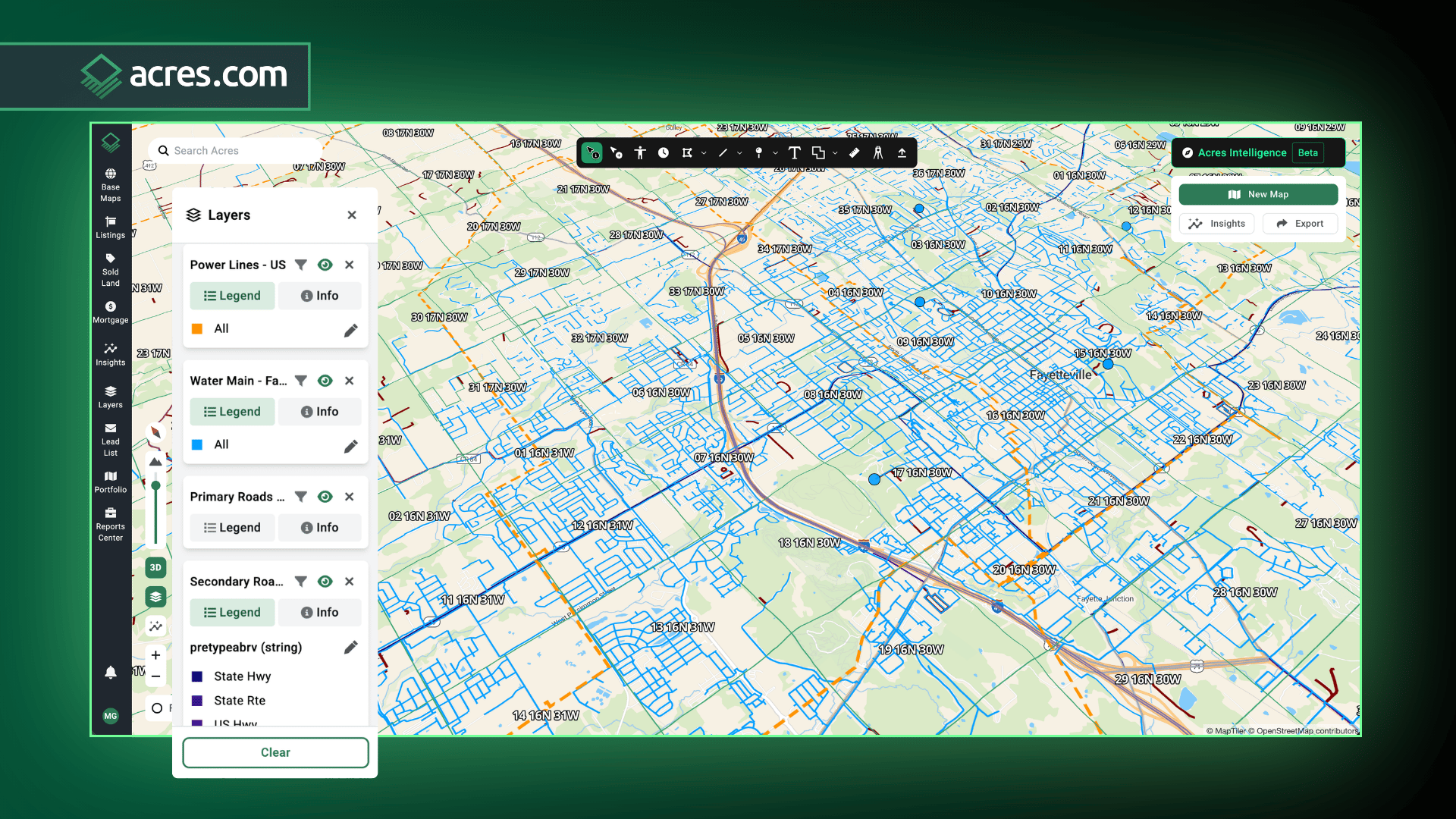
Before committing to either land type, use Acres to check the parcel's infrastructure proximity layer—road access, utility lines, and recorded easement data are visible in the parcel view. A raw parcel that looks underpriced on a listing site can reveal access and utility constraints that add tens of thousands in development costs before a single structure goes up.
How Financing Differs for Raw vs. Developed Land
This is where the raw land vs. developed land distinction has the most immediate practical impact for first-time buyers. Raw land loans can be significantly harder to obtain than financing for developed parcels.
Lenders tend to classify raw land as high-risk collateral because there is no income stream, no structure to appraise, and limited comparable sale data in many markets. Down payment requirements for raw land loans frequently run 30-50% of the purchase price, and interest rates carry a meaningful premium over conventional mortgage rates.
Raw land is generally classified as riskier than home loans, so buyers should expect a higher down payment requirement and interest rate than with a conventional mortgage.
On developed land, the equation shifts. Infrastructure in place means the lender has clearer collateral. Buyers can typically secure improved lot loans with significantly lower down payment requirements and more favorable interest rates than raw land, or bundle the purchase into a single construction-to-permanent loan.
Seller financing is common in raw land transactions precisely because institutional lending is restrictive. Knowing the exact type of parcel you’re looking at helps you align your budget with the right financing options before you begin the buying process.
What Raw Land Buyers Need to Evaluate Before Purchasing
Buying raw land isn’t inherently more or less risky than developed land, but it carries a unique set of risks that require specific due diligence. First-time buyers evaluating types of land for sale in raw and undeveloped categories should check:
- Legal access. Does the parcel have a recorded easement providing legal access to a public road? Physical access via a dirt path is not the same as legal access. Landlocked parcels cannot be financed and are difficult to sell.
- Utility availability and cost. How far are water, power, and sewer connections from the parcel boundary? In rural areas, the cost to extend utilities can run from tens of thousands to over $100,000 depending on distance and terrain.
- Zoning and permitted uses. What can legally be built on the parcel? Zoning restrictions can make an otherwise attractive raw parcel nearly undevelopable without a lengthy and uncertain rezoning process.
- Environmental constraints. Flood zones, wetlands, and soil conditions can prohibit or limit development significantly. Environmental risk screening on Acres surfaces flood exposure, zoning constraints, and parcel-level risk signals before due diligence begins.
When Developed Land Is the Right Choice for First-Time Buyers
A buyer who needs to break ground within 12 months does not have time for a 24-month entitlement and utility installation process. A buyer financing through a conventional lender does not have the 30-50% down payment that raw land requires. A buyer with a specific, immediate development plan needs the infrastructure certainty that developed land provides.
The premium paid for developed land is a purchase of optionality. The buyer can build sooner, finance more affordably, and sell more easily if plans change. For many first-time buyers entering undeveloped land investment for the first time, starting with developed or improved parcels reduces execution risk significantly.
The raw vs. developed distinction does not end at the listing type. It runs through every downstream decision: financing structure, development timeline, carrying cost, and exit strategy.
Rather than piecing together utility maps, zoning records, and ownership data from separate county sources, Acres puts all of that context in one parcel view so buyers can evaluate what they are actually buying before the offer is written.
How Acres Helps Buyers Evaluate Both Land Types
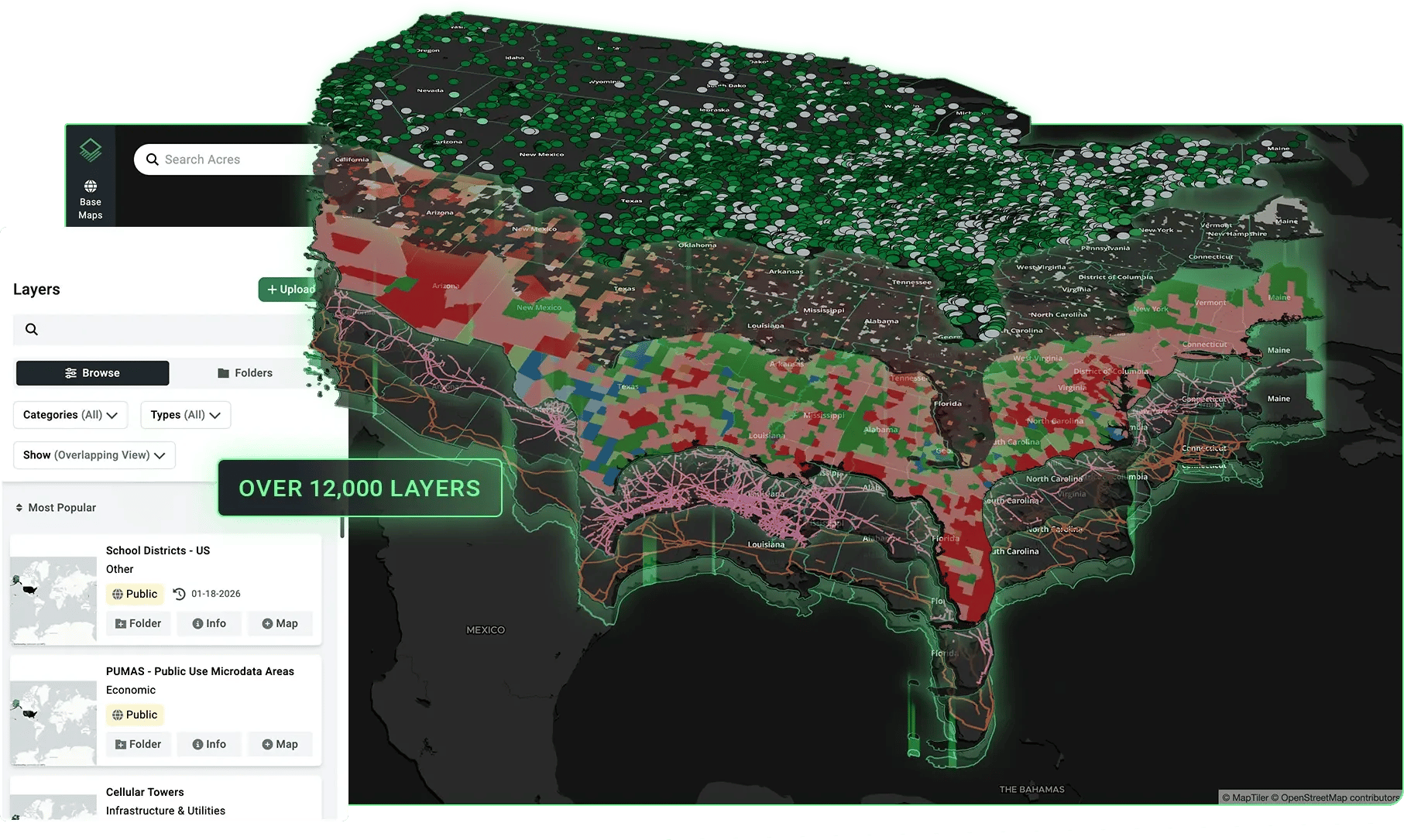
Whether you are evaluating a raw parcel for its development potential or a developed lot for its immediate usability, the data that drives the decision is the same: zoning, access, utilities, environmental signals, ownership history, and comparable transaction data. Acres gives buyers access to the most extensive, complete view of land data in a single system for over 150 million parcels. Explore land analysis tools on Acres built for exactly this kind of pre-purchase evaluation.
Say no faster, focus on viable deals, and outpace your competitors. The difference between a raw parcel with hidden constraints and a developed lot ready for construction is visible in the data before any due diligence cost is incurred.
Raw vs. Developed Land: The Deciding Factors
Raw land can offer a lower entry cost, greater flexibility, and higher appreciation potential over time as regional growth drives up land value. It demands patience, cash or alternative financing, and detailed due diligence on access, utilities, zoning, and environmental conditions.
For first-time buyers, the right choice depends on timeline, financing access, and risk tolerance—not on which listing looks cheaper per acre. Understanding what each land type actually costs and what it takes to make it usable is the real starting point for a sound land buying decision.
Evaluating raw or developed land in your target market? Surface zoning, access, utilities, and parcel history for any U.S. parcel before you commit. Explore land analysis on Acres.